


The northern region of Vietnam is undergoing a rapid transformation in its industrial landscape. Thanks to recent administrative‑boundary changes and growing demand from high‑tech and manufacturing players, the industrial park in north Vietnam network is expanding significantly – offering new opportunities for investors, manufacturers, and supply‑chain actors alike.
Surge in Land Supply: New Parks and Expanding Capacity
Recent data shows a dramatic increase in available industrial land in the north. As of late 2025, total industrial‑land supply reached 23,563 hectares, representing a 37% increase compared to the pre‑merger period.
In the first quarter alone, three new industrial parks opened in Phu Tho, Hai Phong and Ninh Binh, adding over 700 hectares of leasable land. This influx of supply reflects accelerating industrialization outside traditional hubs, helping reshape the geography of manufacturing in the country.
Among new developments, projects such as Dong Van V & VI in Ninh Bình stand out — together offering nearly 500 hectares of leasable land, targeting both large investors and SMEs under a flexible Industrial Park & Logistics Cluster model.
This expansion in scale and variety shows that the Northern industrial belt is no longer just a collection of isolated parks but is evolving into a more integrated, region‑wide platform for production, logistics, and supply‑chain infrastructure.
Demand Holds Strong Despite Lower Overall Occupancy — Rents Keep Rising
Although overall occupancy across northern industrial parks sits at about 67%, this reflects the influx of new supply more than a drop in demand. Key provinces such as Hanoi, Bac Ninh, and Hải Phòng continue to exhibit high occupancy levels: Hanoi is nearly full, and Bac Ninh maintains around 86% occupancy.
Rental rates for industrial land in the north have also increased to USD 133/m² per lease term — up 4% year‑on‑year. This trend demonstrates that despite growing land availability, quality locations and ready‑built factories remain in high demand from firms involved in electronics, circuit boards, high‑tech components, and contract manufacturing.
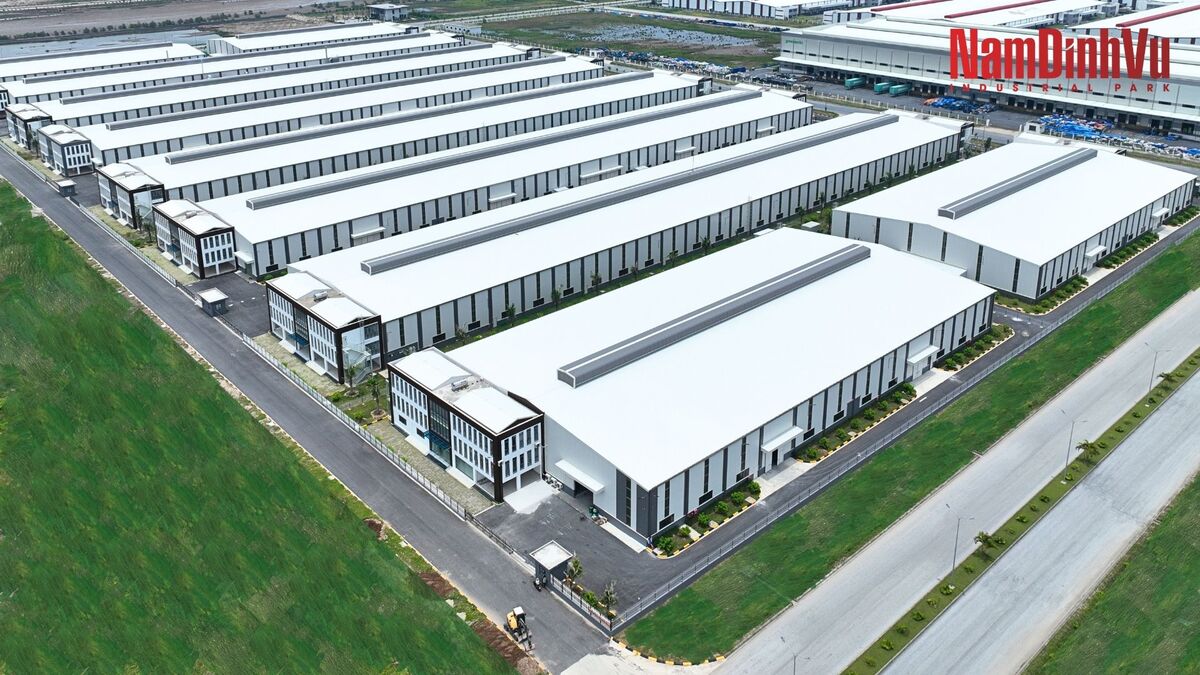
Furthermore, ready-built factories (RBF) and warehouses are expanding rapidly — total RBF supply reportedly reached 5.1 million m², growing by 14% recently, with major additions such as VSIP Bac Ninh 2 and projects in Hung Yen. The ready-built warehouse (RBW) segment also saw growth, with supply rising 7.6%, and occupancy jumping to 77%.
These data suggest that while raw land supply increases, the demand for operational-ready space — especially in manufacturing and logistics — remains robust, underlining strong structural demand in northern industrial zones.
Northern Industrial Park in North Vietnam as a Strategic Fabric of Supply Chains
The transformation of northern industrial areas is not only about size — but about integrating multiple layers of industrial and logistic infrastructure. As the region expands, so does its connectivity and ecosystem readiness.
Projects such as the upcoming Gia Binh International Airport upgrade and the expansion of the North–South Expressway are expected to reinforce the northern corridor’s logistics capacity, significantly improving accessibility between production hubs, ports, and cross‑regional supply routes.
New-generation industrial parks like Dong Van V & VI are designed under the Industrial Park & Logistics Cluster (LIC) model, featuring ready-built infrastructure, multi-story factories, flexible plot sizes, and integrated logistics services — suitable for both large multinational firms and local SMEs.
This evolving industrial fabric positions northern Vietnam as a compelling alternative to traditional global manufacturing hubs. Global investors see value in the combination of growing supply, stable demand, improving infrastructure, and a diversified supplier base — making northern industrial parks increasingly relevant in international supply chain strategies.
In conclusion, the growth of the industrial park in the north Vietnam sector is accelerating — marked by expanding supply, sustained demand, and evolving infrastructure that supports modern manufacturing and logistics needs. As Vietnam’s northern industrial belt deepens and broadens, the region stands out as a viable, competitive, and strategic destination for future investment and global supply‑chain integration.