


Vietnam’s industrial development is entering a new phase as the country accelerates plans to expand industrial parks and clusters nationwide. Rather than focusing on individual locations, recent policy discussions highlight scale, quality, and strategic positioning within global supply chains – key themes shaping the future of the Vietnam industrial zone list through 2030.
National Expansion Targets and Industrial Scale
By 2030, Vietnam aims to expand its total industrial park area to 181,000 hectares, increasing the number of industrial parks nationwide from 478 to approximately 600. This planned expansion will add around 35,000 hectares of new industrial land, alongside the significant development of industrial clusters, which are expected to grow from 1,100 to 2,000 clusters, supported by an additional 29,000 hectares of land. These targets highlight the government’s long-term commitment to strengthening industrial infrastructure as a foundation for economic growth, export performance, and manufacturing capacity.
As of the end of 2025, industrial parks already covered roughly 146,000 hectares, indicating that Vietnam has established a substantial industrial base while still maintaining room for further development. The continued expansion reflects not only quantitative growth, but also a broader ambition to enhance the scale, efficiency, and strategic role of industrial zones within the national economy. Taken together, these figures suggest that industrial parks will remain a central component of Vietnam’s development strategy, supporting sustained investment inflows and reinforcing the country’s position in regional and global production networks.
Economic Diplomacy and Value-Chain Positioning
Experts and industry representatives emphasize that achieving these ambitious expansion targets will depend not only on physical infrastructure, but also on the effectiveness of economic diplomacy in attracting higher-quality investment flows. In this context, industrial zones are increasingly being positioned as value-chain hubs rather than standalone production locations, enabling closer collaboration between domestic and foreign enterprises. Such environments are expected to facilitate technology sharing, market access, and deeper participation in global production networks.
At the strategic level, policymakers highlight the importance of capitalizing on recent administrative mergers to unlock new development areas and improve coordination across regions. Strengthening regional investment branding through more consistent policies, clearer planning frameworks, and improved infrastructure is also seen as a key factor in enhancing investor confidence. At the same time, closer linkages between foreign direct investment and local manufacturing capabilities are encouraged to support long-term industrial upgrading. Together, these approaches aim to gradually elevate Vietnam’s role within global supply chains, shifting the focus toward higher value creation rather than competition based solely on cost or scale.
Advancing Sustainable Quality and Long-Term Industrial Competitiveness
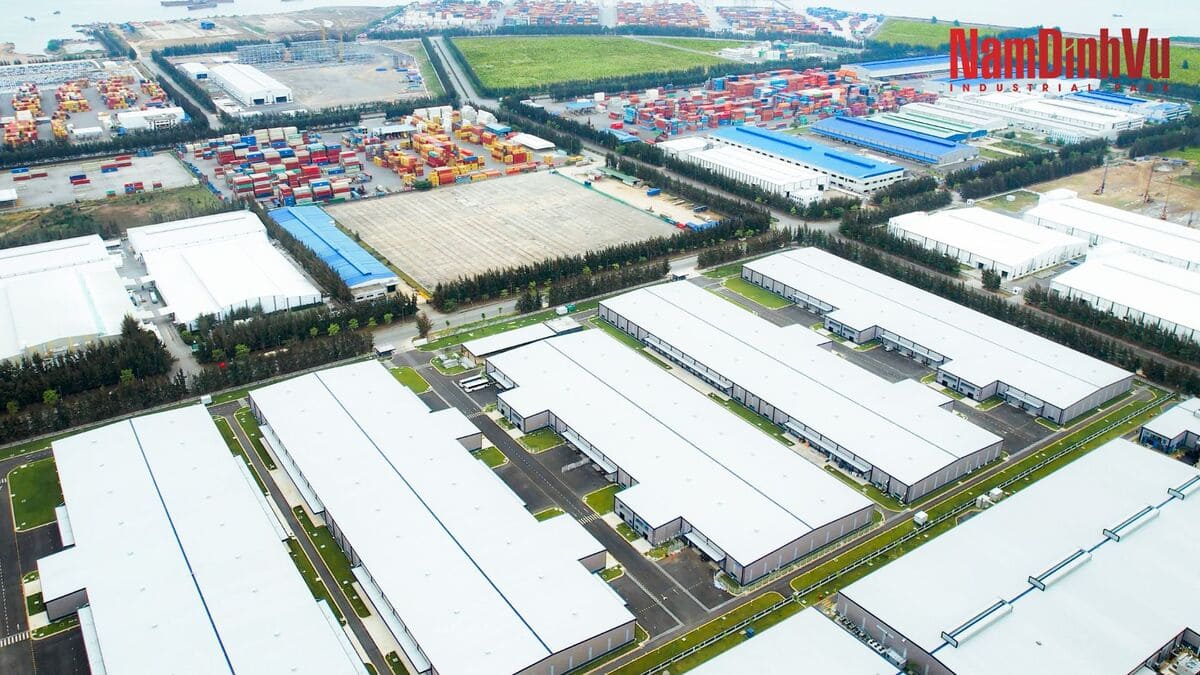
Beyond numerical growth and land expansion, Vietnam’s industrial development strategy is increasingly oriented toward improving overall quality and long-term viability. Policymakers and industry stakeholders highlight the importance of transitioning industrial zones toward more sustainable and modern development models, ensuring that future growth remains aligned with broader economic and environmental objectives. This shift reflects a recognition that competitiveness in the coming decade will depend not only on capacity, but also on efficiency, resilience, and adaptability.
In this context, future industrial zones are expected to integrate renewable energy solutions, digital infrastructure, and modern logistics systems to support more advanced manufacturing operations and create more attractive environments for both investors and the workforce. Such integration is viewed as a way to enhance operational efficiency while responding to evolving global expectations around sustainability and responsible production.
Investment priorities are also gradually moving toward clean, non-polluting, and higher-value industries, including electronics, precision engineering, pharmaceuticals, food processing, and interior furnishings. Alongside sectoral focus, continued efforts to strengthen trade and investment cooperation, promote innovation, and deepen international partnerships are considered essential for maintaining Vietnam’s long-term industrial competitiveness. Together, these elements form the foundation for an industrial ecosystem that supports stable growth, higher value creation, and stronger integration into global value chains over time.
In conclusion, rather than a static Vietnam industrial zone list, Vietnam’s industrial landscape is evolving into a strategically coordinated system focused on scale, quality, and global integration. With clear expansion targets and an emphasis on economic diplomacy and sustainability, industrial zones will remain central to Vietnam’s development trajectory toward 2030.
Source: Vietnam Plus