


Northern Vietnam is entering a new growth cycle in industrial real estate, driven by infrastructure upgrades, expanding supply, and the rapid rise of green industrial parks. These factors are reshaping how investors approach industrial land for lease northern Vietnam, making sustainability a key decision driver.
Expanding Supply Strengthens Industrial Land for Lease Northern Vietnam
The northern region is set to significantly increase industrial capacity between 2026 and 2029, with an additional 5,050 hectares of industrial land, nearly 1 million sq.m of ready-built factories, and over 656,000 sq.m of ready-built warehouses entering the market. This expansion reflects a broader trend of continuous infrastructure development across key industrial provinces. It also highlights the region’s ongoing efforts to meet growing demand from international manufacturers.
In 2026 alone, ready-built factory supply is expected to grow by more than 643,000 sq.m, creating strong opportunities for sectors such as electronics, semiconductors, and high-tech manufacturing. This growth is considered a positive signal for investors seeking flexible and scalable production spaces. At the same time, it reinforces the role of northern Vietnam as a strategic destination for high-value industries.
By the end of 2025, total industrial land supply had already reached nearly 23,990 hectares, marking a 42.8% year-on-year increase, with average lease prices at USD 135 per sq.m. Despite this rapid expansion, occupancy remained stable at 65.74%, while ready-built factories and warehouses achieved high occupancy rates of 86% and over 83%, respectively. These figures indicate a balanced market where supply growth is matched by steady demand. Overall, the data suggests a resilient industrial real estate sector with strong absorption capacity.
Green Industrial Parks Redefine Investment Priorities
Sustainability is becoming a decisive factor for foreign investors. Green industrial parks are increasingly designed with integrated features such as rooftop solar energy systems, centralized wastewater treatment, eco-friendly materials, and smart energy management. This shift reflects a broader global movement toward environmentally responsible industrial development. It also shows how developers are adapting to new expectations from international tenants.
These next-generation developments also adopt higher technical standards, enabling automation and digitalized production, which are essential for advanced industries like semiconductors and electronics. Such improvements help enhance operational efficiency and long-term cost optimization for businesses. At the same time, they create a more modern and competitive industrial ecosystem.
As global supply chains evolve and ESG (Environmental, Social, Governance) requirements tighten, investors are prioritizing locations that combine sustainability, scalability, and compliance with international standards. This trend is expected to continue as more corporations commit to greener production strategies. In the long run, it further strengthens the appeal of environmentally friendly industrial parks in northern Vietnam.
Formation of a New Production–Logistics Belt
Investment is no longer concentrated in traditional industrial hubs. Instead, it is spreading to satellite provinces such as Hung Yen, Ninh Binh, Hai Phong, and Phu Tho, forming an interconnected production and logistics belt. This shift reflects a more balanced distribution of industrial development across the region. It also indicates a strategic move to optimize land use and infrastructure capacity.
Key centers like Hai Phong and Bac Ninh continue to play a pivotal role thanks to their deep-sea ports and established high-tech ecosystems, while neighboring provinces offer large land reserves at competitive costs for expansion projects. This combination creates a complementary dynamic between core and emerging locations. At the same time, it provides investors with more flexible options for scaling their operations.
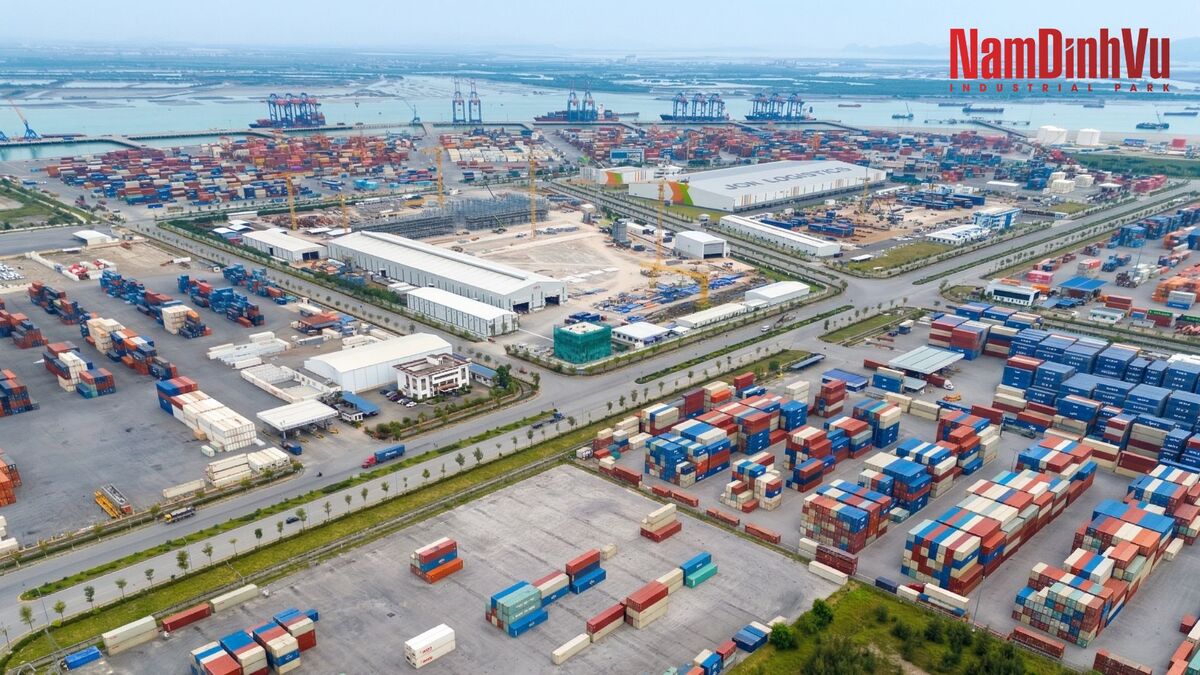
This regional shift supports the development of a synchronized industrial network, improving connectivity and enabling more efficient supply chain operations across northern Vietnam. It also enhances the overall resilience of the industrial sector in the face of changing market conditions. In the long term, this trend is expected to further strengthen regional integration and economic growth.
In conclusion, the market for industrial land for lease northern Vietnam is rapidly evolving, with strong supply growth, high occupancy rates, and a clear shift toward green industrial models. As sustainability and infrastructure continue to improve, the region is well-positioned to attract high-quality FDI and strengthen its long-term competitiveness in global manufacturing.
Source: BacNinhTV Newspaper