


Hai Phong is entering a new development phase following its administrative merger, significantly expanding its scale and strategic importance. This transformation is creating new momentum for Hai Phong industrial land, positioning the city as a key investment destination in northern Vietnam.
Post-Merger Expansion Strengthens Industrial Scale
Following the merger with Hai Duong in mid-2025, Hai Phong now covers approximately 3,194.72 km² with a population of over 4.7 million people, making it one of the largest municipal economies in Vietnam. This expansion marks a significant milestone in the city’s development trajectory. It also reflects a broader strategy to enhance regional integration and economic scale.
This expanded scale provides a stronger foundation for industrial and urban development, combining Hai Duong’s industrial and agricultural base with Hai Phong’s strengths in logistics and manufacturing. It also creates a more unified economic space to support large-scale investment projects. Such integration helps optimize resource allocation across the newly merged area. At the same time, it opens up new opportunities for coordinated planning and development.
The city has also shown improvements in governance efficiency, with faster administrative procedures and better coordination between authorities. Notably, Hai Phong ranked first in the Provincial Competitiveness Index (PCI) in 2025, alongside leading positions in multiple governance indicators. These achievements highlight the city’s ongoing efforts to improve its business environment. Overall, they contribute to strengthening investor confidence and long-term growth prospects.
Policy Incentives and FTZ Unlock Investment Potential
To accelerate development, the National Assembly introduced Resolution No. 226/2025/QH15, effective from July 2025, providing special mechanisms to enhance Hai Phong’s competitiveness. This policy framework marks an important step in strengthening the city’s institutional advantages. It also reflects the government’s commitment to supporting Hai Phong’s long-term growth.
Under this framework, the city is granted greater autonomy in approving large-scale port and infrastructure projects, helping to shorten investment procedures. In addition, Hai Phong is allowed to retain 100% of revenues from inland waterways and port-related fees, strengthening its financial capacity for infrastructure development. These advantages create more favorable conditions for both public and private investment. At the same time, they help accelerate the implementation of key projects.
A key highlight is the establishment of a Free Trade Zone (FTZ), designed to attract foreign investment through preferential tax policies, simplified procedures, and long-term visa incentives for skilled workers and experts. This initiative is expected to become a major driver for export-oriented industries and international trade expansion. It also contributes to enhancing Hai Phong’s position in global supply chains. Overall, the FTZ is seen as a strategic move to boost economic competitiveness.
Infrastructure and Industrial Ecosystem Drive Growth
Hai Phong’s competitive advantage lies in its well-developed multi-modal transport system, including seaports, highways, railways, inland waterways, and air transport. This integrated network creates seamless connectivity for both domestic and international trade. It also plays a crucial role in supporting the city’s rapid industrial expansion.
Key infrastructure includes the Lach Huyen International Deep-Water Port, capable of handling large container vessels, and Nam Dinh Vu Port with a capacity of over 600,000 TEU per year, reinforcing the city’s role as a major logistics hub. These facilities significantly enhance cargo handling efficiency and reduce transportation costs. At the same time, they strengthen Hai Phong’s position as a key gateway for northern Vietnam.
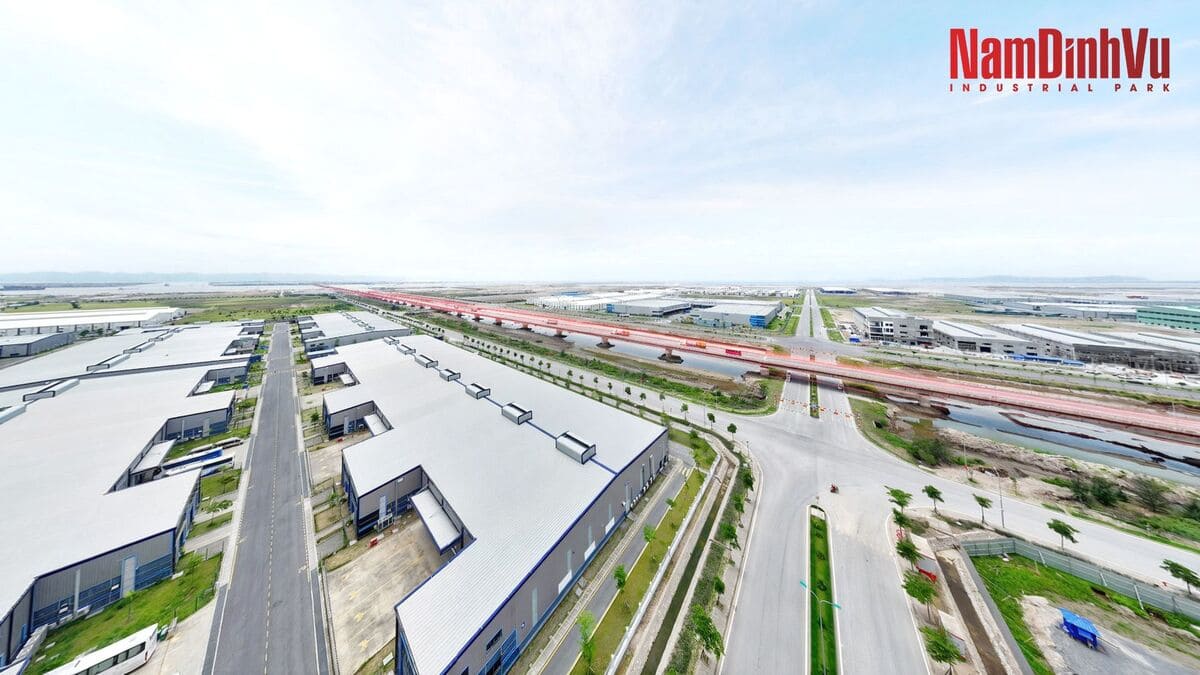
The industrial ecosystem is anchored by large-scale zones such as the Dinh Vu – Cat Hai Economic Zone (22,540 ha), along with major industrial parks. These zones attract multinational corporations that contributing to Hai Phong’s position in global manufacturing supply chains. This concentration of major investors creates strong spillover effects across the local economy. It also fosters the development of supporting industries and services.
In 2025, the city recorded export turnover of approximately US$50.14 billion and cargo throughput of 238 million tons, highlighting its strong trade performance and logistics capacity. These figures demonstrate the city’s growing importance in regional and global trade flows. Overall, they reflect a solid foundation for continued industrial and economic growth.
In conclusion, with its expanded scale, supportive policies, and world-class infrastructure, Hai Phong is rapidly transforming into a leading industrial and logistics hub. The evolution of Hai Phong industrial land reflects this shift, offering strong potential for investors seeking long-term growth in northern Vietnam.
Source: Vietnam Briefing