


The industrial real estate market in northern Vietnam is entering a phase of rapid expansion, supported by strong supply growth and stable demand. This creates favorable conditions for investors seeking industrial park land in northern Vietnam as the region continues to strengthen its position in global supply chains.
Surging Supply Boosts Industrial Park Land Northern Vietnam
The market recorded a significant increase in industrial land supply in Q4 2025, with total accumulated stock reaching approximately 23,990 hectares. In the same period, around 640 hectares of new industrial land were added from major projects such as Phuc Son Industrial Park (125 ha), Que Vo 2 Phase 2 (277.64 ha), and Dong Van V in Ninh Binh (237 ha). This growth highlights the continued expansion of industrial zones across key provinces. It also reflects the strong commitment from developers to bring new supply to the market.
This surge in supply reflects a broader expansion trend across the region, where multiple projects are being accelerated to meet investor demand. It also shows that northern Vietnam is actively preparing land resources for the next wave of manufacturing growth. Such developments are becoming increasingly common as competition between localities intensifies. At the same time, they contribute to improving the overall investment environment.
In addition to land, the market also saw strong growth in ready-built factories and warehouses, contributing to a more diversified industrial ecosystem. This expansion plays a key role in improving the region’s competitiveness in attracting foreign investment. It also provides tenants with more flexible options when selecting production and storage facilities. Overall, this trend supports the sustainable development of the industrial real estate market.
Strong Demand Keeps Occupancy and Prices Stable
Despite the rapid increase in supply, demand across key segments remained stable, driven by manufacturing and high-tech industries. The average occupancy rate for industrial land stood at around 65.7%, while ready-built factories achieved 86% occupancy, reflecting strong absorption capacity. This stability suggests that the market continues to maintain a healthy balance between supply and demand. It also indicates sustained interest from both domestic and international investors.
In the ready-built factory segment, net absorption reached nearly 190,000 sq.m, marking a sharp increase compared to the previous year. This highlights continued expansion by manufacturers and reinforces the region’s attractiveness for production activities. Such growth demonstrates the ability of the market to quickly absorb new supply. At the same time, it reflects the ongoing shift toward more flexible production spaces.
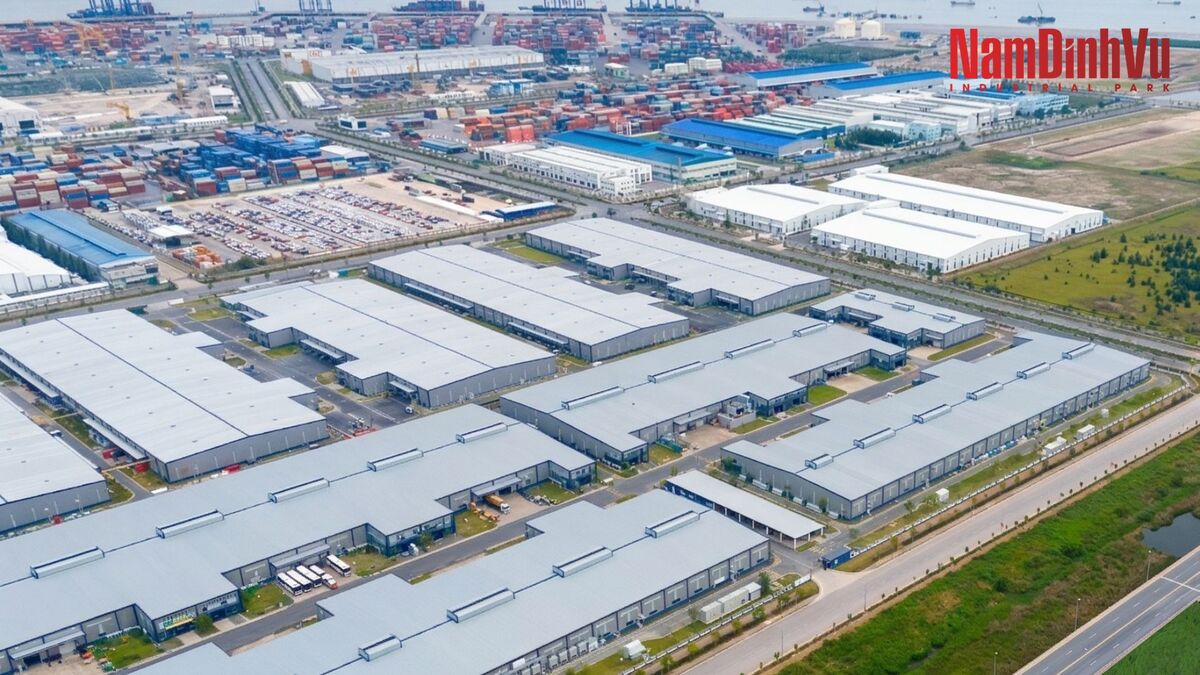
Meanwhile, rental prices continued to rise steadily, with industrial land averaging USD 135 per sq.m per lease term, while factory and warehouse rents hovered around USD 5 and USD 4.9 per sq.m per month, respectively. These figures indicate a balanced market where rising supply does not weaken pricing power. It also shows that landlords are able to maintain stable returns despite increasing competition. Overall, pricing trends remain positive across most segments.
New Demand Drivers Reshape Market Structure
The growth of e-commerce has become a major driver of logistics demand, with Vietnam’s e-commerce market reaching an estimated USD 26–28 billion in 2025. In the first nine months alone, major platforms such as Shopee, TikTok Shop, Lazada, and Tiki recorded total transactions of USD 11.62 billion, up 34.4% year-on-year. This rapid expansion highlights the increasing importance of logistics and warehousing infrastructure. It also reflects changing consumer behavior and the rise of digital commerce.
At the same time, emerging sectors such as semiconductors, data centers, and high-tech manufacturing are creating new requirements for industrial land, including stable power supply, advanced infrastructure, and R&D space. This shift signals a transition from traditional manufacturing to higher-value industries. Such changes are becoming more evident as investors look for locations that can support advanced production needs. In addition, it reinforces the region’s role in global supply chain transformation.
Additionally, Vietnam had 41 data centers with a total capacity of 524.7 MW by 2025, further boosting demand for specialized industrial facilities. These new demand drivers are gradually reshaping the structure of the industrial real estate market in northern Vietnam. This trend is expected to continue as technology-driven industries expand further. Overall, it contributes to the long-term modernization of the industrial sector.
In conclusion, the outlook for industrial park land northern Vietnam remains highly positive, with strong supply expansion, resilient demand, and new growth drivers emerging from technology and logistics sectors. As infrastructure improves and investment trends evolve, the region is expected to maintain its upward trajectory and attract higher-quality industrial projects in the coming years.
Source: Lao Dong News