


Vietnam’s industrial parks are rapidly evolving to meet growing demand from foreign investors and global supply chains. Recent developments in infrastructure, upgraded ready-built factories, and projects targeting high-tech industries are positioning Vietnam industrial parks as strategic destinations for both domestic and international businesses.
Ready-Built Factories: Flexible Solutions for Businesses
A standout example is the expansion of An Phat Industrial Zone in Hai Phong, which added more than 60,000 m² of ready-built factory and warehouse space. Notably, the project introduced two-story factories for the first time in Vietnam, with flexible units ranging from 1,000 m² to larger spaces suitable for multinational companies. These innovations allow businesses to move in quickly without the delays of construction, while also providing the ability to reconfigure layouts as production needs change. The article highlights that such projects reflect the rising quality of industrial property, offering modern facilities and improved infrastructure that appeal to both domestic and foreign firms.
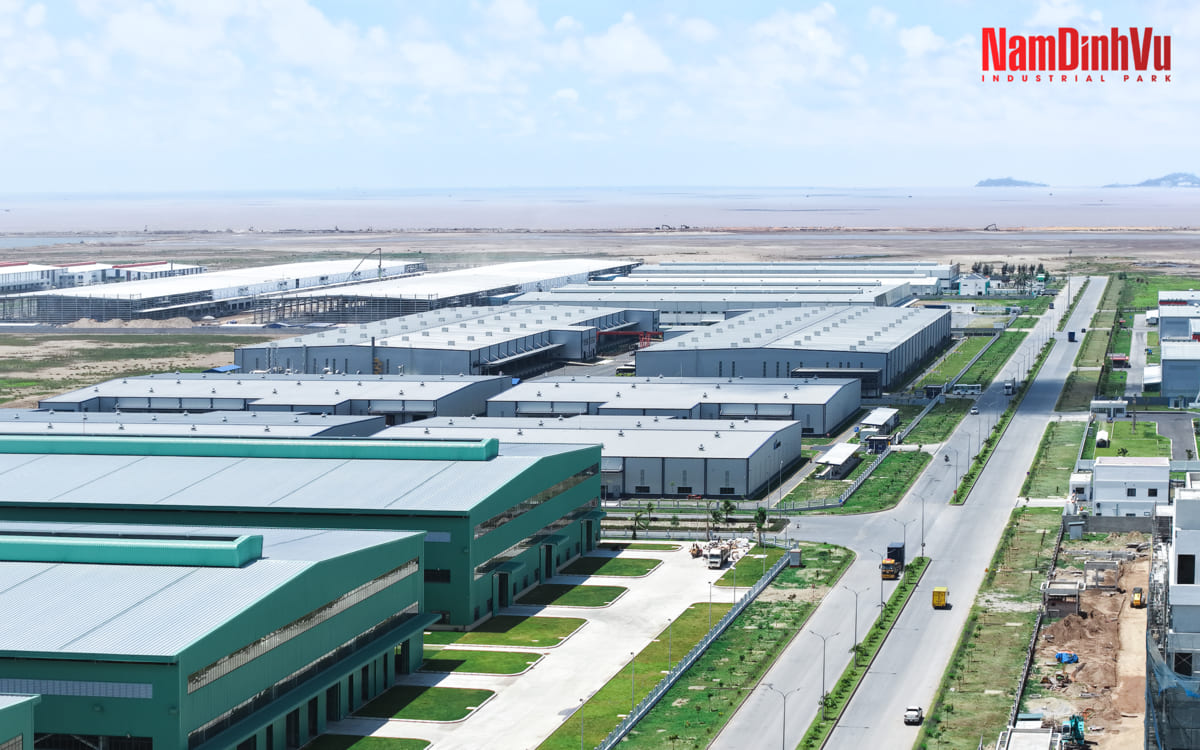
This flexibility reflects a clear trend: industrial parks are no longer just empty land plots for construction. Ready-built factories help companies accelerate operations, reduce costs, and scale efficiently — especially for industries with high technical standards such as electronics, PCBs, and manufacturing. The upgraded facilities, including better utilities and modern design, provide companies with reliable, move-in-ready spaces that meet international standards and growing investor expectations.
FDI Attraction and High-Tech Investment Opportunities
Vietnam industrial parks are increasingly attracting foreign direct investment (FDI) due to competitive labor costs, stable policies, and a clear regulatory framework. The article highlights that newly developed projects, particularly in Hai Phong, are designed to support high-tech manufacturing, lean production, and integration into global supply chains. These factors make the parks highly appealing to multinational companies seeking reliable and cost-effective locations for expansion. This trend reflects Vietnam’s growing reputation as a stable and investor-friendly destination in the regional industrial market.
These developments enable industrial parks to go beyond traditional production support, providing modern platforms for large-scale, technology-intensive factories ready to meet the rigorous standards of international clients. By offering upgraded infrastructure, ready-built factories, and flexible spaces, these parks allow companies to deploy production quickly while maintaining high operational standards. This combination of quality and efficiency strengthens Vietnam’s position as a competitive destination for high-tech FDI. It also encourages further investment in infrastructure and services to support advanced manufacturing operations.
Modernization and Sustainability: Moving Toward Advanced Industrial Models
Beyond expanding space and upgrading factories, Vietnam industrial parks are focusing on comprehensive quality improvements — modern infrastructure, ready-to-use warehouse and factory units, and logistics systems capable of supporting high-tech production. These enhancements help ensure that parks meet the needs of investors seeking efficiency, reliability, and compliance with international standards. They also reflect a broader trend in Vietnam toward creating industrial zones that can support long-term growth and attract high-value projects.
Innovations such as two-story ready-built factories and flexible unit sizes ensure that industrial parks can accommodate a diverse range of businesses, from SMEs to multinational corporations. Projects like An Phat exemplify the trend toward modern, flexible, and ready-to-operate industrial zones in Vietnam. This approach demonstrates the country’s commitment to creating industrial ecosystems that combine scalability, sustainability, and advanced operational capabilities. Moreover, such developments enhance Vietnam’s competitiveness in the regional and global manufacturing landscape, making it a preferred destination for investors.
In conclusion, Vietnam industrial parks are transforming from traditional industrial areas into modern hubs ready for high-quality production. With upgraded infrastructure, flexible ready-built factories, and ongoing FDI inflows, Vietnam offers investors a strategic and promising industrial landscape.
Source: Vietstock