


Vietnam’s industrial real estate market is entering a new development cycle as competition gradually shifts away from low rental costs and large land banks toward infrastructure quality, operational standards, and the ability to support high-tech industries. As global investment strategies continue evolving, industrial parks are also being required to adapt to higher standards in infrastructure, sustainability, and operational efficiency. According to market observations, five major trends are expected to reshape industrial land rental Vietnam in 2026 and beyond.
Vietnam’s industrial real estate market is entering a new development cycle as competition gradually shifts away from low rental costs and large land banks toward infrastructure quality, operational standards, and the ability to support high-tech industries. According to market observations, five major trends are expected to reshape industrial land rental Vietnam in 2026 and beyond.
Industrial Parks Compete on Quality Instead of Scale
As global supply chains continue restructuring, multinational corporations are diversifying production locations and looking for markets with political stability and stronger integration into global value chains. This trend is becoming increasingly visible across Asia as manufacturers seek to improve supply chain resilience and reduce operational risks. While Vietnam still benefits from competitive labor costs, electricity prices, and an attractive investment environment, these advantages are no longer enough on their own.
The market is increasingly favoring industrial parks with synchronized infrastructure, efficient logistics systems, stable power supply, transparent legal frameworks, and the ability to meet international standards. Investors are also paying greater attention to long-term operational efficiency and the overall quality of industrial ecosystems before making expansion decisions. This is driving a transition from broad-based growth to more selective growth, where only high-quality industrial parks are expected to maintain long-term competitiveness.
High-Tech Manufacturing Is Replacing Labor-Intensive Production
The market is witnessing a clear shift in FDI demand from labor-intensive manufacturing toward high-tech manufacturing, semiconductors, electronics, and research and development activities. This transition is gradually reshaping tenant requirements across many industrial zones in Vietnam. As production standards continue evolving, developers are expected to face increasing pressure to upgrade infrastructure and services to attract new-generation investors.
At the same time, industrial parks capable of supporting technology-driven industries are becoming more attractive to international manufacturers seeking long-term expansion opportunities in Vietnam.
Green Industrial Parks And ESG Standards Are Becoming Essential
ESG requirements, Net Zero commitments, the EU’s Carbon Border Adjustment Mechanism (CBAM), and sustainability standards from multinational corporations are accelerating the transformation of industrial park models in Vietnam. Sustainability is becoming an increasingly important factor in investment decisions as businesses face greater pressure to comply with global environmental standards and supply chain requirements.
Next-generation industrial parks are no longer expected to simply provide land and factories. Instead, developers are increasingly required to integrate renewable energy, circular wastewater treatment systems, digital infrastructure, logistics services, and green spaces into industrial ecosystems. The market is gradually moving toward more integrated and environmentally responsible industrial models.
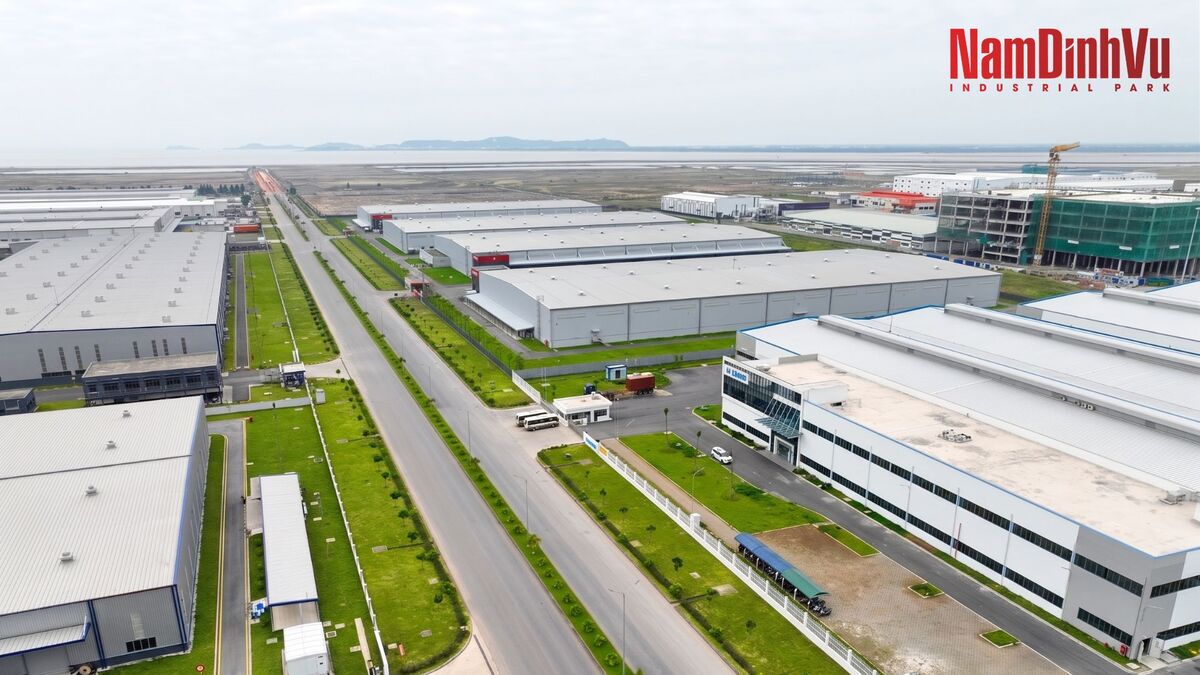
This trend is also becoming more visible in major industrial hubs across Vietnam. In Hai Phong City, Nam Dinh Vu Industrial Park is actively aligning its long-term development strategy with green industrial park standards, integrated infrastructure systems, and sustainable industrial ecosystem goals in order to better support investors adapting to ESG and global supply chain requirements.
Logistics, Warehousing, And Data Centers Are Emerging As New Demand Drivers
The structure of market demand is also changing significantly. Besides manufacturing, logistics, e-commerce, warehousing, fulfillment centers, and data centers are becoming important demand drivers. This diversification is creating additional momentum for industrial real estate across multiple asset classes. Businesses are increasingly prioritizing ready-built factories and warehousing systems to shorten deployment timelines and optimize operating costs.
In particular, the rapid growth of artificial intelligence, cloud computing, and the digital economy is fueling demand for data centers, a segment requiring extremely high standards in telecommunications, operational safety, redundancy, and power infrastructure. As digital transformation accelerates globally, Vietnam is gradually attracting greater attention as a potential destination for future data center investment.
Divergence Is Becoming More Visible Across Vietnam
Market data from 2025 showed that Vietnam’s industrial real estate sector maintained stable occupancy rates and rental growth. Northern Vietnam continued attracting electronics and high-tech manufacturing projects, while the South maintained advantages in logistics, ready-built factories, seaport access, airport connectivity, and regional transportation networks. These regional strengths are continuing to shape investment strategies and tenant preferences across the country.
However, market divergence is expected to become more pronounced in 2026. Industrial parks located near logistics corridors, seaports, airports, and major economic hubs are likely to continue attracting tenants, while projects with weaker infrastructure connectivity may face increasing pressure. Industrial land supply is also forecast to continue increasing during 2026-2029, particularly in southern Vietnam and emerging markets such as Tay Ninh, Gia Lai, the Central region, and the Central Highlands.
Looking ahead, Vietnam’s industrial real estate sector is expected to continue evolving toward high-quality, green, and integrated industrial ecosystems. During the 2026-2030 period, industrial parks with strong infrastructure, sustainability standards, and integrated operational ecosystems are expected to become the main beneficiaries of the next wave of FDI entering Vietnam.
Source: