


The market for industrial land in Vietnam is entering a new phase shaped by global uncertainties and ongoing supply chain restructuring. Instead of rapid expansion, the sector is gradually moving toward a more selective and quality-oriented development approach.
Industrial Land in Vietnam Faces a More Selective Phase
Entering 2026, industrial real estate in Vietnam is increasingly influenced by geopolitical shifts and changes in global supply chains. Investment decisions are no longer driven purely by expansion but are now evaluated based on resilience, policy stability, and long-term sustainability factors. This reflects a broader transformation in how investors assess risk and opportunity in emerging markets. It also suggests that decision-making processes are becoming more structured and strategic over time.
This transition is clearly reflected in market performance. Industrial land leasing activity remained relatively subdued throughout 2025, with net absorption in the southern region declining by 39 per cent year-on-year, despite a more positive trend emerging in the second half of the year. At the same time, supply continues to grow, with more than 1,000 hectares of new industrial land expected to be introduced in the southern market. This combination of rising supply and cautious demand indicates a temporary imbalance in the market. It also highlights the need for developers to carefully align supply strategies with actual market absorption capacity.
As a result, the sector is entering a period of adjustment. Both investors and tenants are becoming more cautious and selective, while developers are no longer competing solely on expansion scale. Instead, greater emphasis is being placed on project quality, infrastructure readiness, and operational efficiency. This shift is expected to gradually reshape competitive dynamics across the market. Over time, it may also contribute to a more sustainable and balanced development trajectory for the sector.
ESG Becomes a Core Requirement for Industrial Land in Vietnam
Alongside shifting investment priorities, ESG factors are becoming a fundamental requirement in the development of industrial land in Vietnam. What was once considered a competitive advantage is now gradually turning into a baseline expectation for participation in global supply chains. This change reflects the growing importance of sustainability standards in international investment decisions. It also indicates that ESG compliance is becoming an essential part of long-term competitiveness.
Developments are increasingly expected to incorporate green infrastructure, stable energy systems, effective water management, and modern wastewater treatment solutions. There is also growing attention on industrial symbiosis models, where resources are shared and optimized across tenants to improve efficiency. These requirements are gradually reshaping how industrial parks are planned and operated. At the same time, they highlight a shift toward more integrated and environmentally responsible development approaches.
However, this transition also comes with certain challenges. Investment decisions are becoming more cautious, with stricter requirements related to policy consistency and supply chain security. In addition, the development of eco-industrial parks still faces limitations due to gaps in regulatory frameworks and inconsistent implementation guidelines. These obstacles can slow down the pace of transformation across the sector. They also underline the need for more coordinated efforts in policy and implementation.
These factors are contributing to a shift in capital flows, where foreign investment is becoming more selective and tends to prioritise projects that demonstrate clear sustainability orientation and long-term adaptability. This trend suggests that only well-prepared developments will be able to attract and retain high-quality investors. Over time, it may also lead to a more refined and resilient industrial real estate market.
A Strategic Shift Toward Quality and Long-Term Operations
Amid evolving market conditions and rising ESG expectations, the industrial land sector in Vietnam is expected to show clearer differentiation moving forward. Development strategies are gradually shifting from rapid expansion to more structured and long-term approaches.
Instead of focusing on increasing land supply, many developers are prioritising the standardisation of industrial park models, deeper investment in infrastructure, and the establishment of stable operational systems. This reflects a broader transition toward sustainable development aligned with international standards.
Eco-industrial park models are becoming more prominent, where sustainability is integrated from the early planning stages. These projects are designed not only as production spaces but also as integrated ecosystems combining infrastructure, services, and long-term operational support.
Infrastructure development is also evolving, with a stronger focus on system stability and flexibility. This includes multi-source energy systems that combine traditional grid power with renewable energy, as well as comprehensive investment in water supply and environmental management systems.
One notable feature of this new model is industrial symbiosis, where energy, water, and materials are shared across enterprises within the same industrial park. This approach can help reduce operating costs by approximately 8–12 per cent while also lowering environmental impact.
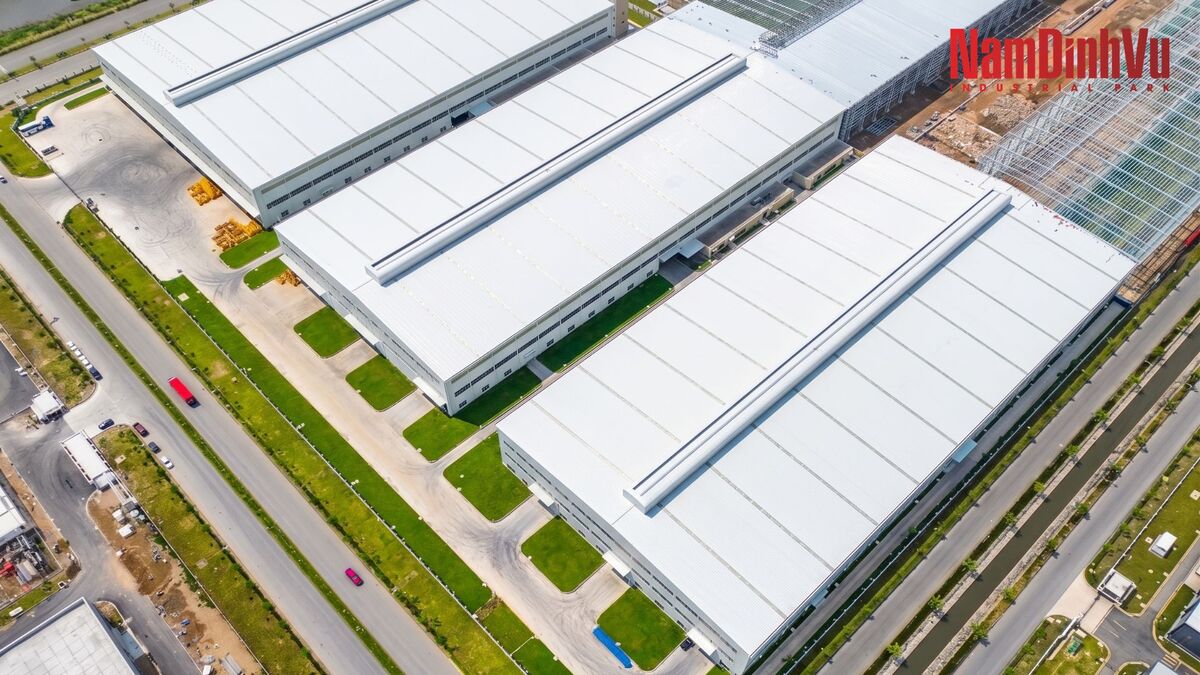
A relevant example of this transition is Nam Dinh Vu Industrial Park in Hai Phong, which is gradually moving toward an eco-industrial park (Eco-IP) model by 2030. With a multi-functional structure that integrates an internal seaport alongside oil and gas, logistics, and industrial zones, the park enables closer coordination between production and supply chain activities. This setup supports more efficient resource use and the application of industrial symbiosis, while ongoing efforts in renewable energy adoption and infrastructure improvements, including port electrification and modernization, reflect a broader alignment with ESG-oriented development trends in Vietnam.
Overall, industrial land in Vietnam is moving into a new development cycle defined by selectivity, sustainability, and operational quality. As global standards continue to evolve, projects that can deliver integrated infrastructure, efficient operations, and long-term value will be better positioned to remain competitive in the years ahead.
Source: