


Industrial Land Lease Market Vietnam
Vietnam’s industrial property sector is moving beyond simple expansion and entering a more selective stage of development. Industrial land, ready-built factories, and logistics assets are no longer growing only to meet volume demand, but are increasingly shaped by requirements for efficiency, sustainability, and long-term competitiveness. This shift reflects Vietnam’s transition from a low-cost manufacturing base to a regional hub for higher-value production.
Stronger Macroeconomic Conditions Support Industrial Demand
Vietnam’s macroeconomic performance in 2025 created a solid foundation for industrial real estate growth. According to JLL, GDP expanded by 8% year-on-year, the fastest rate in ASEAN, while the government is targeting double-digit growth during the 2026–2030 period. This momentum has been supported by resilient domestic demand, improving export conditions, and a rebound in global manufacturing orders. These positive indicators have strengthened confidence among both domestic and international investors, creating a favorable environment for industrial expansion.
Foreign direct investment also remained a major growth driver. Registered FDI reached USD 38.4 billion in 2025, while disbursed capital climbed to USD 27.6 billion, the highest level in five years and up 9% year-on-year. Manufacturing and processing continued to attract the largest share, reinforcing Vietnam’s role in global supply chains. This shows that investors continue to view Vietnam as a strategic production base in Asia, supported by stable policies and improving infrastructure across key industrial zones.
Trade performance added further support. Total import-export turnover reached USD 762.44 billion in the first ten months of 2025, up 17.4% year-on-year. Exports rose to USD 391 billion, driven mainly by electronics, computers, machinery, and other high-value manufactured goods. Imports increased by 18.6%, reflecting stronger demand for machinery, components, and production inputs. Vietnam also recorded a trade surplus of USD 19.56 billion during this period, highlighting its stronger position in regional and global production networks and creating higher demand for industrial parks near ports and transport corridors.
At the same time, major infrastructure projects such as Long Thanh International Airport, Ring Road 3 in Ho Chi Minh City, expressway corridors, and major port upgrades have improved logistics efficiency and expanded the practical reach of industrial parks. Institutional reforms related to land, data, and infrastructure planning have also improved transparency and predictability for investors. Better connectivity allows manufacturers to reduce transport costs and improve supply chain performance, making industrial land leasing more attractive across key economic regions.
Industrial Land Supply Expands While Occupancy Remains High
Despite a sharp increase in supply, Vietnam’s industrial property market remained resilient in 2025. Savills estimated that total operating industrial park land nationwide reached 38,200 hectares in the second half of the year. The Southern Economic Zone accounted for 67% of total supply, while the Northern Economic Zone represented 33%. This shows that the southern region continues to lead in attracting large-scale industrial investment, while the north is strengthening its position through expanding manufacturing activity and better infrastructure connections.
Occupancy rates remained strong at 88%, rising from 86% a year earlier. This indicates that market demand has largely kept pace with the increase in new supply. Industrial and logistics real estate continues to benefit from stable long-term demand, although occupiers are becoming more disciplined and selective in their leasing decisions. Even as more land enters the market, well-positioned industrial parks continue to maintain strong leasing performance.
This trend shows that businesses are no longer focused only on land availability, but are paying greater attention to strategic location, operational efficiency, and assets that support sustainable production goals. Modern industrial parks with stronger infrastructure and better connectivity are attracting greater interest from both domestic and foreign investors. Access to ports, highways, and urban centers has become a major factor in leasing decisions, pushing developers to prioritize long-term planning and asset quality over simple expansion.
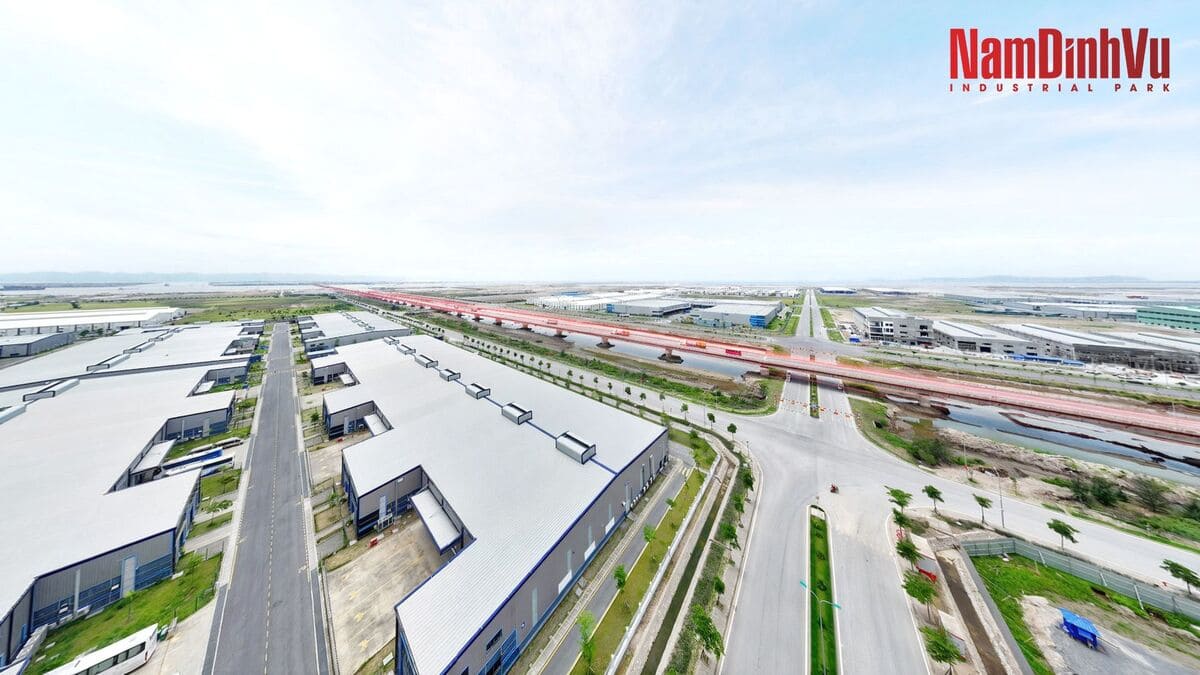
Industrial Land Lease Prices Reflect Higher-Value Production Trends
Average industrial land prices across Vietnam reached USD 175 per sq m per lease term. The northern region remained around 27% cheaper than the south, mainly due to differences in infrastructure maturity, tenant mix, and proximity to ports and major consumption centers. This price gap highlights how logistics advantages and location continue to shape leasing strategies, as investors increasingly evaluate both rental costs and long-term business efficiency.
JLL also reported that industrial land rents in key southern markets ranged from USD 100 to USD 310 per sq m per lease cycle, even as new land continued entering the market. This wide pricing range reflects stronger market segmentation, where premium industrial zones with better logistics access command significantly higher lease values. Areas connected to deep-water ports, expressways, and major urban centers naturally achieve stronger pricing power and attract higher-value tenants.
Rather than competing only on low cost, the industrial land lease market Vietnam is now increasingly driven by scale, productivity, and long-term investment quality. Higher-value manufacturing sectors such as electronics, machinery, and advanced production are shaping leasing demand and pushing the market toward a more sophisticated development model. Businesses are placing greater focus on supply chain efficiency, labor availability, and sustainability standards, helping Vietnam move toward stronger industrial competitiveness in the years ahead.
In the coming years, the industrial land lease market Vietnam is expected to continue evolving as investors place greater emphasis on efficiency, infrastructure quality, and sustainable development. This transformation will not only improve the country’s industrial competitiveness but also strengthen Vietnam’s position as one of Asia’s leading manufacturing and logistics hubs.
Source: Vn Economy