


Vietnam’s industrial property market is moving into a more mature phase as foreign investors become increasingly selective about where and how they expand. Rather than relying primarily on available land and lower costs, investment decisions are increasingly influenced by infrastructure quality, logistics efficiency, operational standards and ESG requirements. This shift is changing the factors behind Vietnam real estate price dynamics, particularly in the Southern Key Economic Region, where the market is transitioning from rapid supply expansion toward absorption, restructuring and more selective capital allocation.
Vietnam Real Estate Price Dynamics Shift Beyond Land Availability
The Southern Key Economic Region currently has approximately 36,400 hectares of industrial land, with no new projects recorded in the first quarter of 2026. Industrial land occupancy stood at around 74.8%, slightly higher quarter-on-quarter but lower compared with the same period a year earlier. At the same time, net absorption increased by 182% quarter-on-quarter, showing that demand remains present even as manufacturers take a more cautious approach to expansion.
The slowdown therefore does not necessarily indicate weaker industrial demand. Instead, it reflects a market moving beyond the rapid supply expansion recorded between 2021 and 2024. Elevated interest rates, geopolitical tensions, higher logistics costs and growing trade protectionism are encouraging multinational manufacturers to assess expansion plans more selectively. As a result, industrial property decisions increasingly depend on the long-term operational value of a location rather than land availability alone.
This change is also visible in the geographic distribution of investment. Ho Chi Minh City remains the region’s largest manufacturing and logistics hub, supported by high-tech and value-added industries, but limited land availability and rising costs are gradually directing investment toward surrounding areas. Transport infrastructure is becoming an important variable in this process, with airports, ring roads, interprovincial expressways, seaports and logistics corridors opening additional development areas and reshaping industrial supply chains.
Ready-Built Properties and Logistics Gain Greater Importance
One of the clearest structural changes is the growing role of ready-built industrial properties. Ready-built factory supply in southern Vietnam reached approximately 6.8 million sq m in Q1/2026, with nearly 192,000 sq m of additional space entering the market. Some industrial clusters reported near-full occupancy, with rates reaching approximately 95% in Dong Nai and more than 93% in Tay Ninh. These figures demonstrate strong demand for industrial facilities that allow businesses to establish operations more quickly.
Manufacturers are increasingly choosing ready-built factories rather than developing facilities from scratch. This approach can accelerate production timelines, reduce upfront investment and provide greater operational flexibility. The trend is particularly pronounced among businesses operating in electronics, precision engineering, supporting industries and high-tech manufacturing, reinforcing the broader shift in FDI from mass production toward higher-value activities.
Warehousing is showing similarly strong fundamentals. Ready-built warehouse occupancy across southern Vietnam reached 91.7% in the latest quarter despite no new supply, while Ho Chi Minh City was almost fully occupied at approximately 99%. E-commerce and logistics growth are supporting this demand, while limited availability in established locations is creating spillover toward satellite areas with larger land banks and lower operating costs. Over the medium term, logistics properties connected to ports, airports and ring roads are expected to remain among the market’s most attractive assets.
FDI Shifts Toward Infrastructure, High-Tech and ESG
Vietnam’s FDI figures continue to provide a strong foundation for industrial real estate demand. Registered FDI reached $15.2 billion in Q1/2026, representing an increase of 42.9% year-on-year. The quarterly result followed significant volatility, with registered capital falling 40.6% year-on-year in January and 12.6% in February before surging in March. Disbursed FDI reached $5.41 billion, up 9.1% year-on-year and marking the highest first-quarter level in five years.
However, the nature of that investment is changing. FDI is increasingly moving away from mass-production expansion toward higher-value segments such as electronics, technology equipment and semiconductors. This transition is shifting industrial real estate from a predominantly cost-led model toward one in which infrastructure quality, logistics efficiency and operational standards carry significantly more weight. Investors are consequently becoming more selective even as overall capital flows remain resilient.
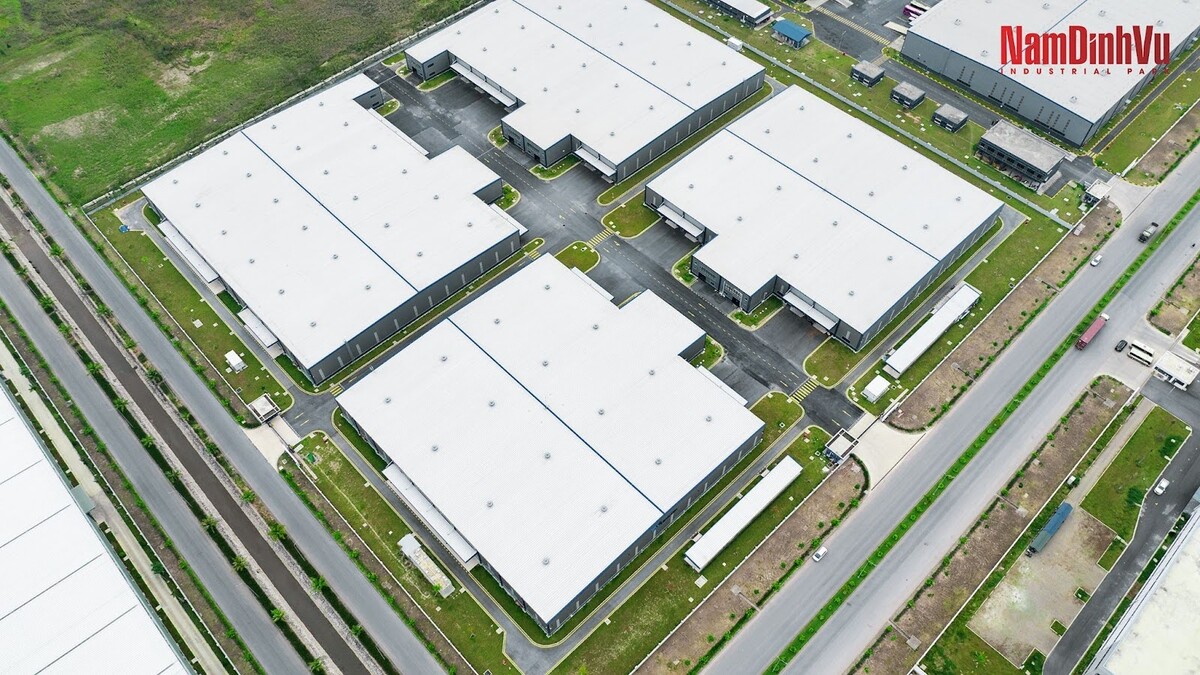
ESG requirements are reinforcing the same transition. International tenants increasingly prioritize industrial assets with stronger operational standards, automation capabilities and environmental compliance, turning green requirements from optional features into baseline expectations. This shift is becoming increasingly visible across Vietnam’s major industrial hubs. In Hai Phong, Nam Dinh Vu Industrial Park is aligning its long-term development strategy with green industrial park standards, integrated infrastructure and a more sustainable industrial ecosystem. This direction reflects the broader evolution of investor requirements, as businesses increasingly consider ESG performance, infrastructure quality and supply chain resilience when evaluating industrial locations.
In conclusion, the changing dynamics behind Vietnam real estate price reflect an industrial property market that is becoming more mature, selective and quality-driven. With 36,400 hectares of industrial land, warehouse occupancy at 91.7%, ready-built factory supply reaching 6.8 million sq m, and registered FDI rising 42.9% year-on-year to $15.2 billion in Q1/2026, demand remains substantial while the factors influencing investment decisions continue to evolve. The phase of easy expansion based primarily on land availability is giving way to a market where infrastructure execution, logistics connectivity, high-tech tenant attraction and ESG standards increasingly determine the long-term competitiveness of industrial locations.
Source: The Investor