


Demand for warehouse space for lease in Vietnam is entering a new growth cycle as e-commerce expands and businesses place greater emphasis on logistics efficiency, infrastructure and connectivity. Rather than broad-based industrial expansion alone, demand is becoming increasingly sector-specific, with modern warehousing, fulfillment facilities and technology-integrated logistics spaces gaining importance. Industrial locations near major cities and key manufacturing corridors are particularly well positioned as businesses seek faster delivery, lower logistics costs and more efficient supply chains.
E-Commerce Drives Demand for Warehouse Space for Lease in Vietnam
The rapid expansion of e-commerce is directly influencing Vietnam’s industrial real estate market, particularly its warehousing and logistics segment. According to Savills, the country’s e-commerce market was projected to reach $26–28 billion in 2025. During the first nine months of 2025 alone, four major e-commerce platforms recorded a combined gross merchandise value of $11.62 billion, representing growth of 34.4% year-on-year. This expanding transaction volume is creating greater requirements for the physical infrastructure needed to store, process and distribute goods.
Competition within e-commerce is also intensifying. More than 7,000 new sellers entered the market during the first half of 2025, encouraging platforms to move their attention beyond market-share expansion toward greater operational efficiency. Warehousing and order fulfilment systems are becoming central to this transition, as companies need to process growing order volumes while controlling delivery times and operating costs. The role of logistics real estate is therefore becoming increasingly closely connected with the performance of the broader e-commerce ecosystem.
This shift is generating demand for more sophisticated logistics models, including fulfilment centres, technology-integrated warehouses and rapid delivery systems. Industrial parks located near Ho Chi Minh City, Ha Noi and key industrial corridors are benefiting as businesses prioritize shorter delivery times and last-mile cost optimization. For companies evaluating warehouse space for lease in Vietnam, location is therefore increasingly considered alongside the operational capabilities of the facility itself.
Manufacturing Supply Chains Add Another Layer of Logistics Demand
Warehousing demand is also being supported by the expansion of higher-value manufacturing industries. Between 2023 and 2025, Vietnam recorded $11.6 billion in new investment in semiconductors and high-value electronics, while semiconductor assembly and testing alone attracted approximately $3 billion in registered capital. This expansion is creating demand not only for production facilities but also for the infrastructure and logistics networks needed to support increasingly sophisticated manufacturing operations.
Electric vehicles represent another expanding source of industrial and logistics demand. Vietnam’s EV market reached an estimated $3.2 billion in 2025, and battery electric vehicles accounted for 42% of total new car sales during the first half of 2025. Growth in this industry is generating activity across components, batteries and electronics, creating broader requirements throughout the domestic manufacturing supply chain.
These developments are changing what businesses require from industrial locations. Manufacturers increasingly need environments capable of connecting production with component suppliers, logistics operations and technical services. Industrial zones close to manufacturing hubs, seaports and major industrial corridors consequently hold clear advantages. For the warehouse market, this means demand is increasingly connected not only to storage capacity but also to how efficiently facilities can integrate into larger manufacturing and distribution networks.
Location and Infrastructure Become More Important to Warehouse Decisions
The next phase of industrial real estate growth is placing greater emphasis on infrastructure quality and connectivity. According to the Savills outlook cited in the original report, demand is becoming more specialised, with increasingly stringent requirements concerning infrastructure, location and operational capacity. This represents a shift from a market primarily driven by expansion in scale toward one in which the suitability and quality of individual industrial locations play a greater role.
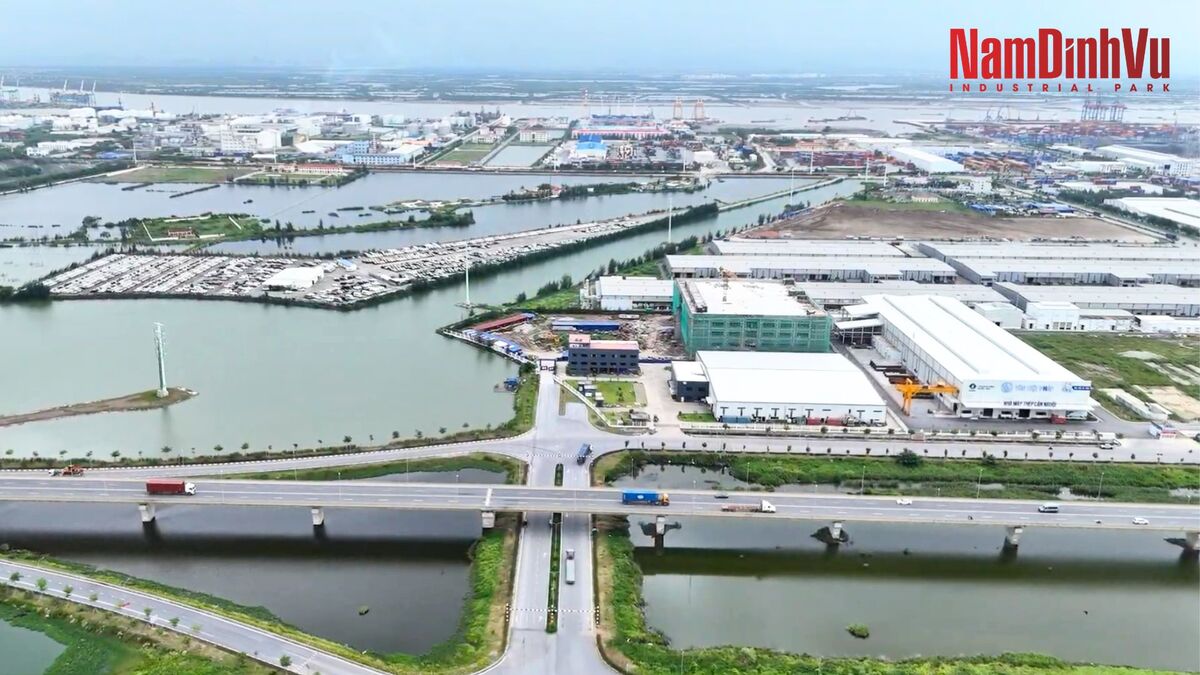
Digital infrastructure is developing alongside physical logistics networks. By 2025, Vietnam had 41 operational data centres with approximately 524.7 MW of total capacity, while capacity is forecast to approach 950 MW by 2030. Although data centres represent a distinct industrial real estate segment, their expansion demonstrates the increasingly specialised infrastructure requirements emerging across Vietnam’s industrial market, including stable power supply, technical infrastructure, connectivity and long-term scalability.
This growing market segmentation means industrial parks will increasingly differentiate themselves according to their ability to serve specific industries and operating requirements. Projects capable of meeting the demands of e-commerce, high-tech manufacturing and other specialised sectors will have a clearer advantage in attracting tenants. With major infrastructure projects expected to be completed from 2026 onwards, Vietnam’s industrial real estate sector is entering a new cycle where growth in scale is increasingly accompanied by higher expectations for quality.
In conclusion, the outlook for warehouse space for lease in Vietnam is increasingly shaped by the convergence of e-commerce growth, expanding manufacturing supply chains and more demanding logistics requirements. With e-commerce projected at $26–28 billion, major platforms already recording $11.62 billion in GMV during the first nine months of 2025, and high-value industries generating additional demand for integrated industrial infrastructure, warehouses are becoming an increasingly strategic part of Vietnam’s industrial real estate landscape. As businesses focus more closely on delivery efficiency, connectivity and supply chain performance, well-located industrial areas capable of supporting modern logistics operations are positioned to play a more important role in the market’s next growth cycle.
Source: Nhan Dan News