


Vietnam’s industrial landscape is being redrawn by a new generation of infrastructure, logistics networks and more connected manufacturing ecosystems. In 2026, a Vietnam industrial zone map reflects not only the country’s expanding industrial footprint, but also a broader shift toward technology, stronger connectivity, green development and deeper integration with global supply chains.
Vietnam’s Industrial Map Is Shifting from Quantity to Quality
Vietnam’s industrial development is entering a period in which competition is increasingly based on quality rather than simply expanding industrial space. At the Vietnam Industrial Park Summit 2026, held on July 10, industry experts emphasized that industrial growth needs to be driven by science and technology, innovation, higher added value, green and digital transformation, and deeper participation in global value chains. The summit also featured insights from a representative of Sao Do Group on sustainable industrial park development, with a focus on the transition from green infrastructure toward circular industrial ecosystems.
This transition is also changing what international investors look for when selecting industrial locations. A new generation of multinational corporations is no longer focused only on inexpensive labor or large areas of available land. Instead, investment decisions increasingly depend on the availability of a broader industrial ecosystem.
Synchronized logistics infrastructure, green energy and supporting services are becoming important components of that ecosystem. As a result, understanding a Vietnam industrial zone map increasingly involves looking beyond where industrial zones are located and considering how effectively they connect manufacturing operations with infrastructure and supply chains.
Connectivity and Infrastructure Are Reshaping Industrial Locations
Vietnam still faces several challenges as it develops this new industrial model. One of the most significant is uneven connectivity between industrial zones and provincial logistics centers, smart seaports and railway stations. Although the highway network has improved significantly, gaps in these connections can increase transportation costs and reduce the competitiveness of exported goods.
Digital and green transformation also remain uneven. Many industrial parks continue to operate under traditional models without smart energy management, closed-loop wastewater treatment systems or broadband telecommunications infrastructure capable of supporting the Internet of Things (IoT). Legal obstacles related to compensation and land clearance can also delay the availability of cleared industrial land for investors.
The emerging model therefore moves beyond simply providing production space toward building modern industrial ecosystems. Eco-industrial parks can strengthen this transformation by allowing waste from one factory to become input material for another, while rooftop solar power, smart grids and AI-based energy management can support greener industrial operations. Real-time data connections between seaports, customs and factories can also improve supply-chain transparency and reduce warehousing time.
Hai Phong Shows How Industrial and Logistics Networks Can Connect
Within this changing national industrial landscape, Hai Phong provides an example of how industrial locations can be integrated with logistics infrastructure. As the largest international trade gateway in northern Vietnam, the city combines industrial development with a major seaport and transportation network.
The Lach Huyen deep-water port, together with a smart port cluster and highways extending toward border gates, is contributing to the development of a broader logistics corridor. Hai Phong is also developing high-tech industrial areas attracting sectors including high-end consumer electronics, semiconductors and renewable energy equipment.
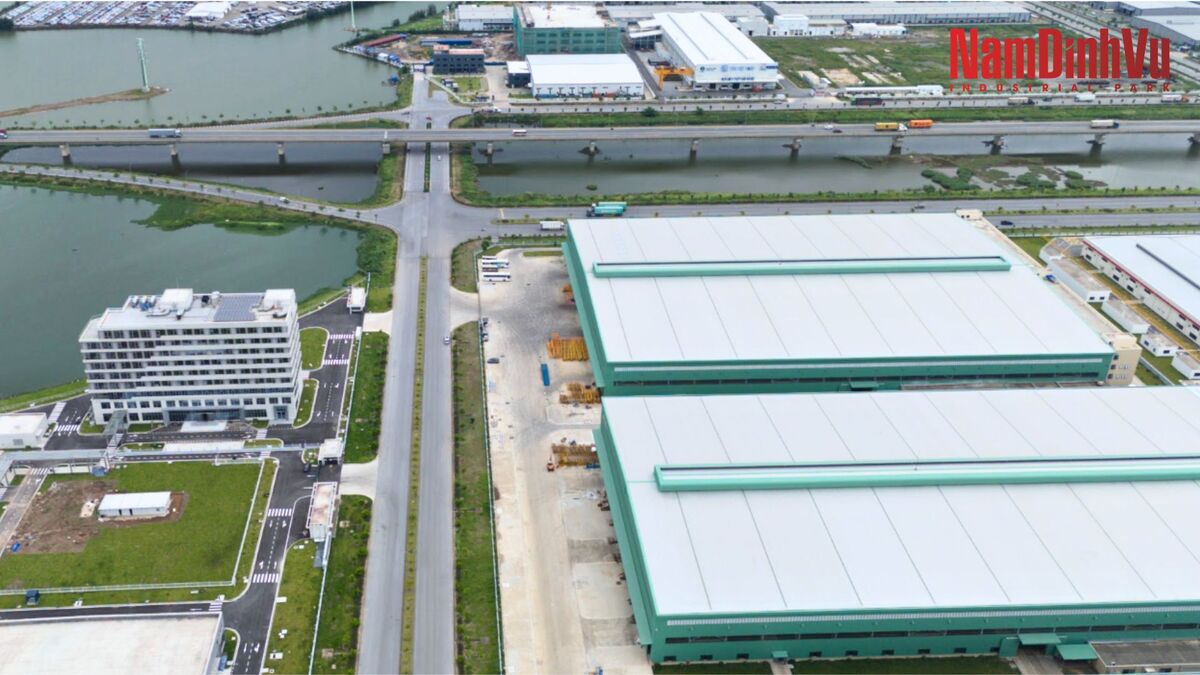
The city’s approach demonstrates a model in which seaports do not operate separately from industrial activity but are connected with warehouses and production lines. In the context of a Vietnam industrial zone map, this illustrates how the value of an industrial location can increasingly depend not only on its geographical position, but also on the connections between manufacturing, logistics and international trade infrastructure.
Overall, A Vietnam industrial zone map provides a geographical view of the country’s manufacturing landscape, but location alone does not capture how Vietnam’s industrial model is evolving. Logistics connectivity, green infrastructure, digital capabilities and integration with supply chains are becoming increasingly important factors in industrial development.
As Vietnam moves toward more modern industrial ecosystems, the connections between industrial zones, transportation networks, logistics infrastructure and seaports are likely to play an increasingly important role in shaping the country’s industrial landscape.
Source: Vietnam.vn & Nam Dinh Vu IP