


Hai Phong continues to reinforce its position as one of Vietnam’s leading industrial and logistics centers by strengthening the connection between industrial development and its seaport system. As transport infrastructure continues to improve, the city is creating more favorable conditions for manufacturing, logistics, and international trade. For businesses evaluating industrial land near port Hai Phong, efficient port connectivity remains one of the city’s most significant competitive advantages.
Seaport Connectivity Continues to Enhance Industrial Competitiveness
The article highlights that industrial developments with convenient access to Hai Phong’s seaport system are expected to benefit from improving transportation infrastructure. Strategic road connections are gradually shortening travel distances between industrial areas and key port facilities, creating more favorable conditions for manufacturers participating in domestic and international supply chains.
Businesses operating within Hai Phong’s industrial areas also benefit from convenient access to national highways, expressways, and the city’s port network. Efficient transportation links help reduce logistics costs, shorten import and export transit times, and improve overall operational efficiency for manufacturing and logistics activities.
As Northern Vietnam’s primary maritime gateway and home to one of the country’s two deep-water ports, Hai Phong continues to leverage its seaport advantages to attract investment. The Hai Phong Economic Zone Authority is currently studying and approving zoning plans for 10 industrial parks covering approximately 1,903 hectares. At the same time, surveys indicate that most businesses operating within the city’s industrial parks and economic zones rely on seaport services to optimize logistics costs and improve import-export performance.
Integrated Infrastructure Supports Long-Term Industrial Growth
Hai Phong is continuing to accelerate transport infrastructure development during the 2026–2030 period to strengthen connectivity between industrial areas and the seaport system. According to the article, these investments are expected to improve cargo transportation while supporting import and export activities across both Hai Phong and Northern Vietnam.
Several major transport projects are expected to play an important role in this strategy, including the completion of Ring Road 2, the expansion of Bui Vien Street, the Lao Cai–Hanoi–Hai Phong railway, the Ninh Binh–Hai Phong Expressway, and the future connection between Lach Huyen Port and Gia Binh Airport. Together, these projects are expected to improve freight capacity, strengthen regional connectivity, and enhance the efficiency of cargo transportation.
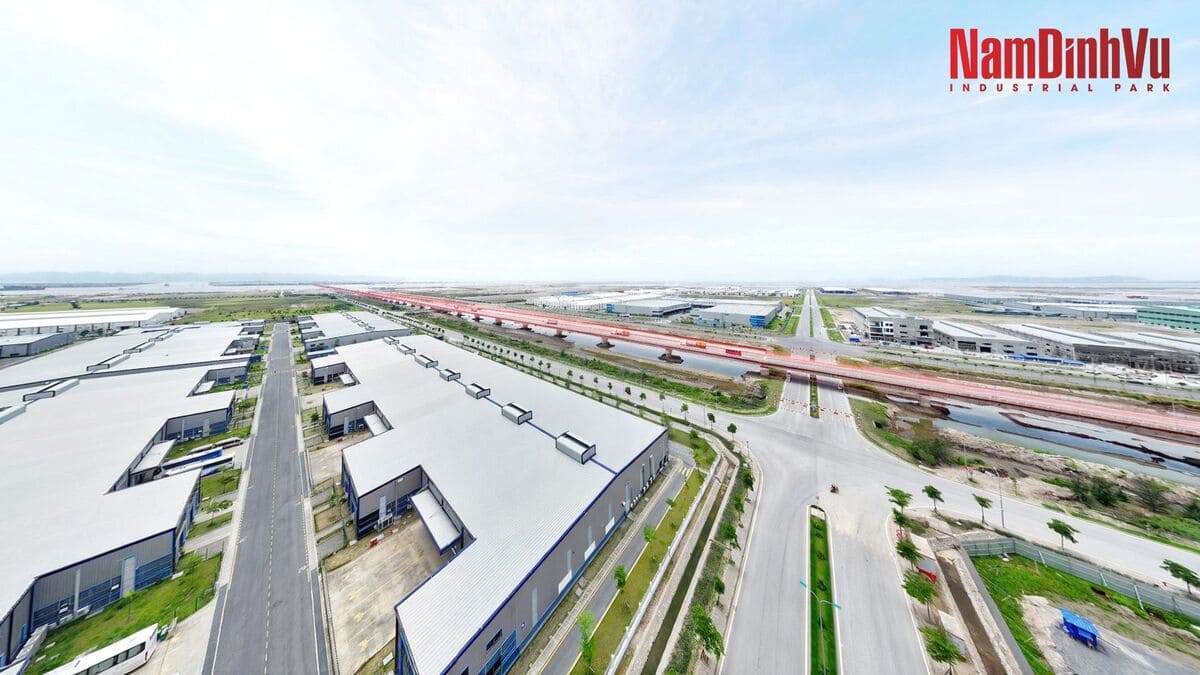
The article also notes that synchronized investment in transport infrastructure and port development will further improve the operational capacity of Hai Phong’s seaport system, particularly Lach Huyen Deep-water Port and the future Nam Do Son Port. These developments are expected to provide stronger support for industrial expansion and logistics activities over the long term.
Industrial Land Near Port Hai Phong Expected to Benefit from Future Investment
Hai Phong’s seaport system continues to expand its international connectivity through direct shipping services linking the city with the United States, Europe, and India without requiring cargo transshipment through intermediate ports. This strengthens Hai Phong’s competitiveness in international trade while creating greater convenience for businesses engaged in import and export activities.
The article indicates that continued improvements in seaport infrastructure, transportation networks, and industrial development are expected to strengthen Hai Phong’s investment environment. Better connectivity allows manufacturers to optimize supply chains, improve logistics efficiency, and enhance access to international markets, supporting the city’s attractiveness for domestic and foreign investment.
Looking ahead, Hai Phong aims to attract between USD 3.8 billion and USD 4.3 billion in foreign direct investment during 2026 while pursuing GRDP growth of 13% or higher throughout the 2026–2030 period. Continued investment in transport infrastructure, industrial development, and seaport connectivity is expected to support these objectives while reinforcing Hai Phong’s role as one of Northern Vietnam’s leading manufacturing and logistics hubs.
In conclusion, the close integration between industrial development, transportation infrastructure, and modern seaport facilities continues to strengthen Hai Phong’s competitive position as a manufacturing and logistics destination. Supported by expanding infrastructure, direct international shipping connections, and long-term industrial planning, industrial land near port Hai Phong is expected to remain an attractive option for businesses seeking efficient logistics, stronger supply chain connectivity, and sustainable long-term growth.
Source: Hai Phong News