


Hai Phong is being positioned as a strategic growth engine in Northern Vietnam, with a strong focus on developing industrial land near port in Hai Phong alongside a modern logistics and marine economy system. The city’s transformation is guided by a long-term vision to become a leading industrial and seaport centre with international competitiveness.
Strategic Vision for Industrial Land Near Port in Hai Phong
The city is required to redefine its role within both the national and regional development structure, acting as a dynamic growth pole in the north and a key connector between domestic and global markets. This direction highlights the importance of long-term positioning in an increasingly competitive economic landscape. It also reflects the broader expectation for Hai Phong to take on a more proactive role in regional integration and development.
Hai Phong is expected to develop into a high-tech industrial centre, an international logistics hub, and a modern marine economy hub. These orientations indicate a shift toward higher value-added industries and more sophisticated economic activities. At the same time, they underline the city’s ambition to align with global standards in industrial and logistics development.
This vision goes beyond simple land allocation, as planning is seen as a strategic framework that determines the city’s long-term position and competitiveness. It serves as a foundation for guiding investment decisions and shaping sustainable growth in the years ahead. In this context, effective planning becomes a key factor in ensuring balanced and efficient development.
In the northern economic structure, Hai Phong will form a development triangle with Ha Noi and Quang Ninh, strengthening its role as a marine growth pole of the Red River Delta and the entire country. This interconnected structure is expected to enhance regional synergies and improve overall economic efficiency. It also reinforces Hai Phong’s strategic importance within the broader national development framework.
Building an Advanced Industrial Ecosystem
To maximize the value of industrial land near the port in Hai Phong, the city is directed to focus on quality-driven industrial development rather than expansion alone. This shift emphasizes efficiency and sustainability instead of rapid but less controlled growth. It also reflects a broader trend in industrial planning where long-term value creation is prioritized over short-term gains.
Key priorities include selecting high-quality investors and advanced technologies, developing strategic supply chains, promoting high-tech, processing, and manufacturing industries, and expanding high value-added supporting industries. These priorities highlight a clear intention to move up the industrial value chain and enhance competitiveness. At the same time, they demonstrate a commitment to building a more resilient and future-ready industrial base.
This approach aims to create a synchronized industrial ecosystem, where production, logistics, and services are closely integrated. Such coordination helps improve operational efficiency and reduces fragmentation across different sectors. It also allows the city to better leverage its existing advantages in infrastructure and geographic location.
At the same time, Hai Phong must address challenges by adopting a new development mindset, applying breakthrough solutions, and maintaining long-term growth orientation. This requires continuous adaptation to changing economic conditions and global trends. It also underlines the importance of innovation and strategic thinking in sustaining industrial development.
Seaport, Logistics and Workforce Development
A core pillar of the strategy is the development of a modern seaport system linked with industrial land and logistics infrastructure. This integrated approach ensures that industrial growth is supported by efficient transportation and supply chain networks. It also reflects the city’s ambition to strengthen its role in regional and international trade.
The city plans to build a modern national and international seaport system, establish an international logistics centre, and integrate multimodal transport, e-commerce, green ports, and smart ports. These directions indicate a comprehensive upgrade of both physical infrastructure and operational capabilities. At the same time, they highlight the importance of adopting innovative solutions to enhance efficiency and sustainability.
The ultimate goal is to position Hai Phong as a coordinating centre for trade flows, logistics, and high-value services in northern Vietnam. This role is expected to enhance connectivity between domestic industries and global markets. It also reinforces the city’s strategic importance within the broader economic landscape.
In parallel, social development is also emphasized through improving workforce quality, expanding social housing, and enhancing living standards. These efforts aim to create a stable foundation for long-term industrial and economic growth. They also demonstrate the recognition that human capital and living conditions play a crucial role in attracting and retaining investment.
These factors are considered essential to sustain industrial growth and attract long-term investment. A well-developed workforce and supportive living environment can significantly improve overall productivity and competitiveness. In this context, balanced development between economic and social aspects remains a key priority for the city.
A representative example of this integrated development model is Nam Dinh Vu Industrial Park. The park is recognized as the only industrial park in Vietnam that incorporates an on-site seaport—Nam Dinh Vu Port—featuring a 300-meter turning basin capable of accommodating vessels of up to 50,000 DWT. With a multi-functional planning approach that combines industrial space, port infrastructure, and a supporting logistics system, the park allows businesses to operate in close proximity to port terminals. This setup helps reduce transportation time, improve cost efficiency, and limit potential supply chain disruptions, in line with Hai Phong’s broader orientation toward developing a modern seaport hub.
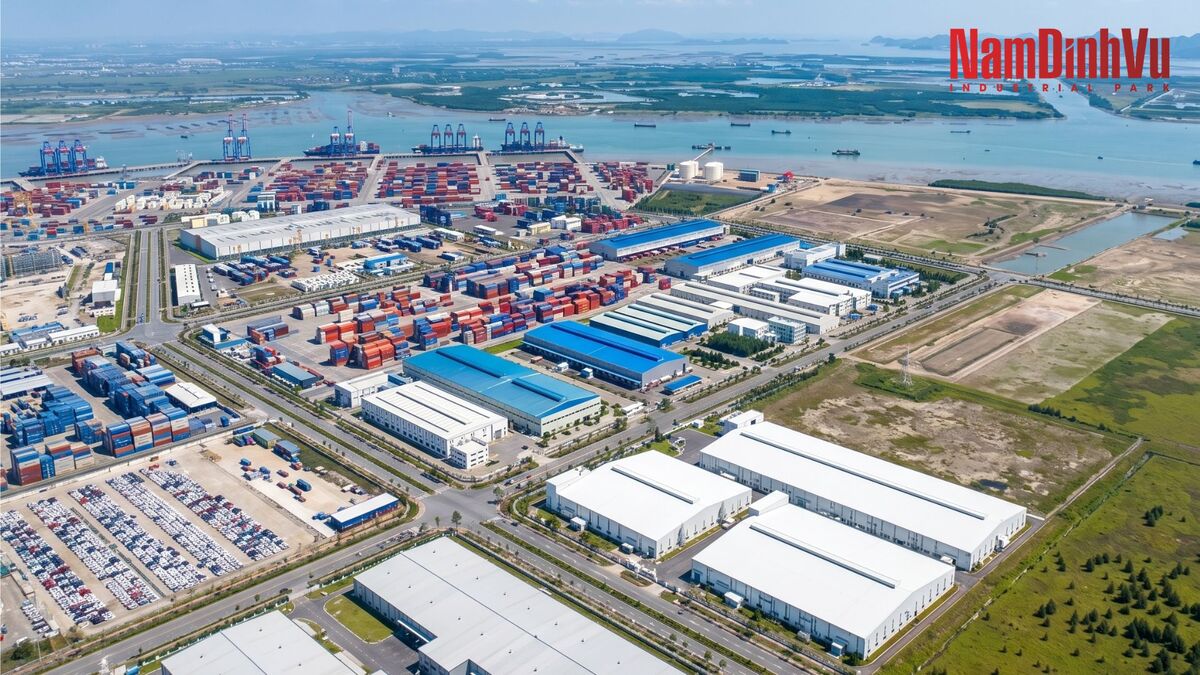
In conclusion, with a clear strategic direction, Hai Phong is accelerating its transformation into a modern industrial and seaport centre, where industrial land near port in Hai Phong plays a central role in driving economic growth. By combining advanced industry, integrated logistics, and human development, the city is expected to become a leading hub not only in the north but across Vietnam.
Source: