


Vietnam’s industrial landscape is entering a new phase as the country pursues ambitious manufacturing and economic growth targets. For investors exploring a Vietnam industrial park list, the changing market is increasingly about more than the number or location of industrial parks. Infrastructure quality, connectivity, technology, sustainability, and integration into manufacturing ecosystems are becoming important factors shaping the country’s industrial development.
Vietnam Industrial Parks Take on a Greater Economic Role
Vietnam has strengthened its position as one of the region’s leading investment destinations through consistent macroeconomic policies. At the same time, foreign direct investment is increasingly favoring markets that combine political and macroeconomic stability with modern digital and energy infrastructure, strong connectivity, and manufacturing ecosystems capable of adapting to supply-chain shifts, digital transformation, and the green transition.
The country’s industrial ambitions are also increasing. Vietnam has set a strategic objective of achieving double-digit annual GDP growth during 2026–2030 and becoming a developing country with a modern industrial base by 2030. Industry has been identified as a primary engine of this growth, with the industrial and construction sector targeted to expand by 12.3% annually during 2026–2030 and manufacturing expected to grow by an average of 12.4% per year.
Against this backdrop, industrial parks are expected to play a broader role. Rather than functioning simply as locations for factories, they provide the foundation for industrial clusters and integrated manufacturing ecosystems. Shared infrastructure can reduce transaction costs, improve logistics efficiency, shorten project implementation timelines, and encourage greater specialization among businesses.
From Industrial Park Expansion to Connected Manufacturing Ecosystems
Connectivity is becoming central to the development of Vietnam’s industrial parks. When industrial areas are linked with seaports, airports, railways, logistics hubs, research institutions, universities, and service-oriented urban areas, they can become important nodes in regional and global production networks. Greater coordination between industrial parks across different localities can also support regional integration, distribute manufacturing activity more efficiently, and help create new economic corridors.
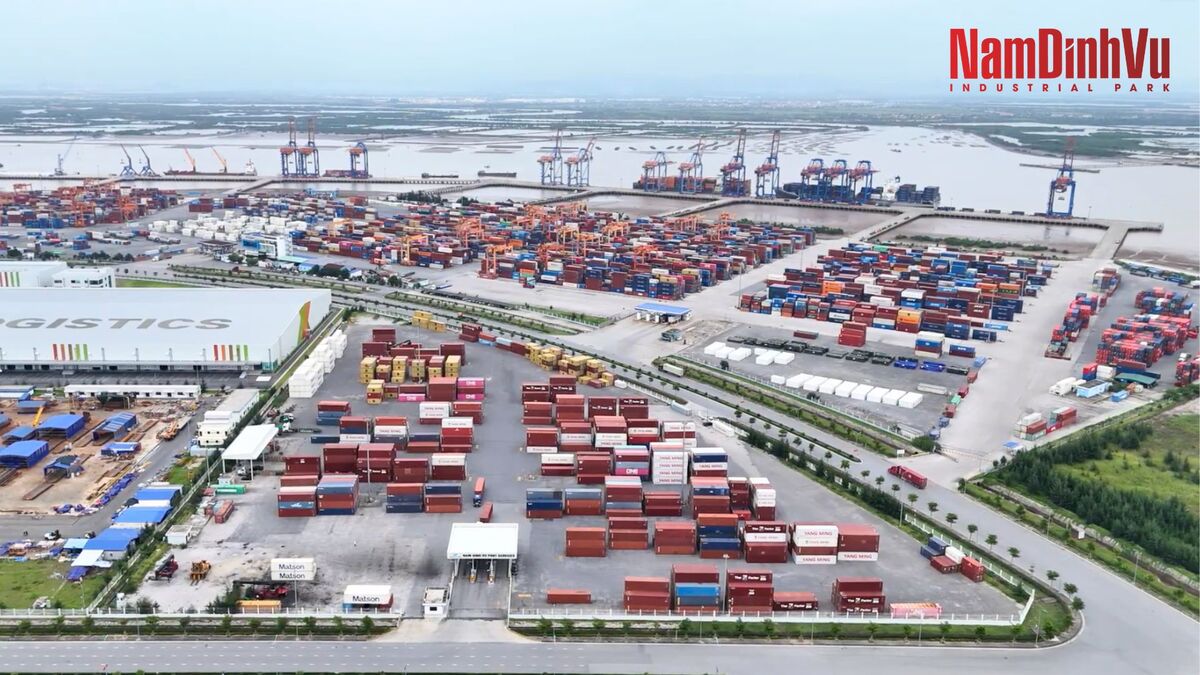
Industrial parks also remain an important mechanism for attracting higher-quality FDI and strengthening domestic supply chains. Under Politburo Resolution No. 10-NQ/TW, issued on June 8, 2026, Vietnam aims to integrate around 10,000 domestic companies into the value chains of foreign-invested enterprises, including 500–1,000 Tier-1 suppliers. Industrial park development can support this objective by prioritizing projects involving advanced technologies, research and development, workforce training, and stronger connections with domestic suppliers.
The development model itself is also becoming more diverse. Government Decree No. 35/2022/ND-CP established a legal framework covering specialized industrial parks, supporting industrial parks, eco-industrial parks, high-tech industrial parks, and integrated industrial park–urban–service developments. Meanwhile, the Law on Investment 2025 decentralized investment approval authority further and introduced special investment procedures intended to accelerate project implementation.
Technology, Green Transformation and Quality Shape the Next Phase
Vietnam’s future industrial expansion is expected to center increasingly on science and technology, innovation, higher value-added production, digitalization, green transformation, and deeper integration into global value chains. This transition means the country’s industrial parks will need to evolve not only in their functions and development models but also in the quality of investment they attract.
Digital and green transformation will be important parts of that process. Digitalized systems integrating land, construction, environmental, and energy data can help streamline administrative procedures, reduce compliance costs, improve incident response, monitor energy efficiency, facilitate data sharing, and strengthen real-time oversight. Technologies including AI, big data, and the Internet of Things (IoT) are also expected to support infrastructure management, energy efficiency, environmental performance, and overall competitiveness, alongside stronger cybersecurity and data protection.
Policy is therefore shifting from simply expanding the number of industrial parks toward improving their quality and effectiveness. Future industrial parks are expected to become more specialized and better integrated into value chains, bringing together anchor manufacturers, supplier networks, logistics centers, research and innovation institutions, workforce training facilities, financial services, and industrial support services. Financing support is also evolving: under Official Letter No. 4551/NHNN-CSTT of May 29, 2026, the State Bank of Vietnam allowed credit institutions to exclude additional lending to industrial parks and export processing zones from real estate credit growth calculations in 2026 when monitoring lending limits, supporting greater financing for industrial infrastructure.
In conclusion, for investors researching a Vietnam industrial park list, Vietnam’s industrial landscape is increasingly defined by more than the availability of industrial land. Connectivity, infrastructure, digital capabilities, sustainability, supply-chain integration, and investment quality are becoming central to the country’s next phase of industrial development.
As Vietnam targets rapid industrial and manufacturing growth through 2030, industrial parks are expected to evolve into more connected, specialized, and technology-driven manufacturing ecosystems capable of supporting higher-value investment and deeper participation in global value chains.
Source: VnEconomy