


As Vietnam strengthens its position as a regional manufacturing and logistics hub, demand for logistics land Vietnam continues to grow alongside the expansion of industrial infrastructure. From industrial land and modern warehouses to cold storage and transport facilities, logistics-oriented industrial properties are playing an increasingly important role in supporting efficient supply chains and long-term business operations.
Industrial Land Forms the Foundation of Logistics Development
Industrial land serves as the starting point for virtually every logistics and industrial real estate project in Vietnam. Located within designated industrial zones, these sites are developed into warehouses, factories, logistics centers, and other industrial facilities that support manufacturing and distribution activities. Rather than functioning as standalone assets, industrial land provides the foundation for an integrated industrial ecosystem. As investment demand continues to expand, the strategic value of well-planned industrial land is becoming increasingly evident.
In Vietnam, industrial land is generally leased rather than sold under freehold ownership. Businesses typically choose between lump-sum and annual rental models, with lease terms extending up to 50 years and supported by Land Use Rights Certificates (LURCs). This leasing framework provides long-term operational certainty while allowing developers to plan industrial projects over extended investment horizons. It also creates a structured environment for investors seeking long-term manufacturing or logistics operations.
According to Savills, industrial land supports a wide range of development strategies, including build-to-suit factories and customized warehouse facilities. The firm also highlights the importance of land valuation, site selection, feasibility analysis, and master planning under Vietnam’s updated 2026 land framework. As industrial requirements become more specialized, selecting the right industrial land is increasingly becoming a strategic business decision rather than simply a real estate transaction.
Modern Warehousing Is Transforming Vietnam’s Logistics Market
Warehousing and distribution facilities continue to evolve as businesses require faster and more efficient supply chain operations. Regional warehouses serve nearby provinces by consolidating consumer goods, while bulk warehouses support large-scale storage for retailers, FMCG companies, and e-commerce operators. Modern warehouse designs increasingly emphasize operational efficiency, allowing businesses to manage inventory and distribution more effectively. These facilities have become essential infrastructure supporting Vietnam’s expanding logistics industry.
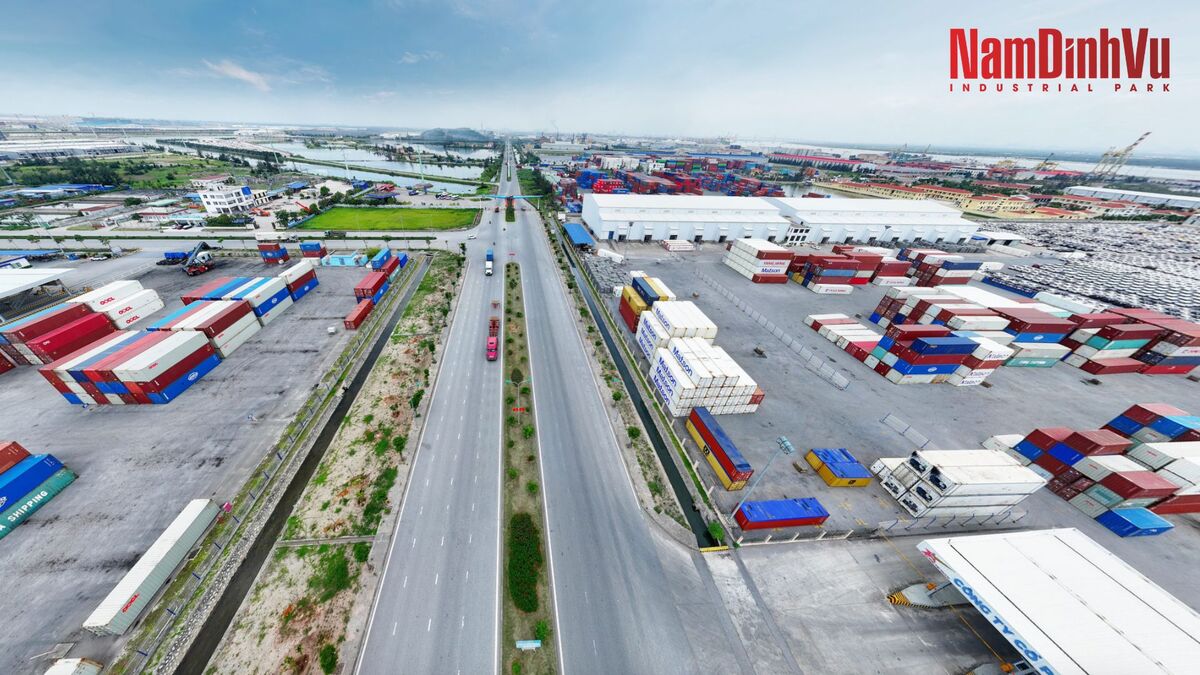
High-specification and automated warehouses represent the next stage of industrial development. According to Savills, Industry 4.0 technologies are reshaping warehouse operations, with tenants requiring specialized floor flatness for Very Narrow Aisle (VNA) trucks and Autonomous Mobile Robots (AMRs). As automation becomes more widely adopted, warehouse design is evolving beyond traditional storage functions to support increasingly sophisticated logistics operations. This trend is particularly evident among large e-commerce operators seeking greater efficiency throughout their distribution networks.
Cold storage has also become one of Vietnam’s fastest-growing industrial property segments. Driven by rising demand for temperature-sensitive products, the market continues to experience strong leasing demand despite limited supply. Savills notes that Japanese and Korean investors are actively developing automated cold storage facilities near Ho Chi Minh City, while rack-supported structures provide higher-density storage solutions with greater operational efficiency. As food, pharmaceutical, and cold-chain logistics continue expanding, demand for specialized warehouse facilities is expected to remain strong.
Logistics Infrastructure Continues to Strengthen Vietnam’s Competitive Position
Efficient transportation infrastructure remains a critical component of Vietnam’s logistics network. Truck terminals are designed primarily for rapid cross-docking operations with minimal storage, allowing goods to move efficiently through just-in-time distribution systems. According to Savills, major logistics hubs are expected to concentrate around the Hanoi–Hai Phong Expressway, northern industrial zones, and deep-water ports such as Cai Mep–Thi Vai and Lach Huyen by 2026. These strategic transport corridors continue to improve connectivity between manufacturing centers and domestic as well as international markets.
Air cargo facilities also play an increasingly important role in supporting high-value and time-sensitive freight. Located near major airports, these specialized facilities connect air transportation with ground logistics while meeting strict operational and security requirements. Multiple warehouse operators currently provide cargo handling services at Noi Bai International Airport, demonstrating the growing importance of air logistics within Vietnam’s broader industrial supply chain. Efficient multimodal connectivity continues to strengthen Vietnam’s logistics capabilities.
Looking ahead, Savills expects demand across logistics-related industrial properties to remain positive. Regional warehouses are forecast to experience steady demand, while bulk warehouses and automated warehouse facilities are expected to benefit from continued e-commerce expansion. Cold storage remains one of the fastest-growing segments due to limited supply, and truck terminals will become increasingly important as just-in-time logistics continues to expand. Together, these industrial property types reinforce the long-term importance of logistics land in supporting Vietnam’s industrial and supply chain development.
Overall, the continued development of logistics land Vietnam reflects the country’s growing role as a regional manufacturing and logistics hub. Supported by modern industrial land, advanced warehousing solutions, specialized logistics facilities, and improving transport infrastructure, Vietnam is steadily building a more efficient industrial ecosystem capable of supporting long-term investment and supply chain growth.
Source: Savills