


Vietnam industrial real estate is entering a new development cycle as global manufacturers, logistics operators, and technology companies continue expanding across the country. According to Phung Xuan Minh, chairman of Saigon Ratings, the market’s competitive advantage is no longer defined mainly by low costs or large land banks, but increasingly by infrastructure quality, operational standards, and the ability to support high-tech industries.
Vietnam Industrial Real Estate Moves from Scale to Quality
Amid ongoing global supply chain restructuring, multinational corporations continue diversifying production locations toward politically stable markets with strong integration into international value chains. Vietnam still maintains advantages in labor costs, electricity prices, and investment attractiveness, but these factors are now considered only basic requirements rather than long-term competitive strengths.
According to the report, the key factors attracting large capital inflows are increasingly linked to synchronized infrastructure, efficient logistics systems, stable power supply, transparent legal frameworks, and the ability to meet global operational standards. As a result, Vietnam industrial real estate is gradually shifting from broad-based expansion toward more selective growth, where only high-quality industrial parks can maintain long-term competitiveness.
At the same time, green, eco-industrial, and smart industrial parks are becoming the new industry standard. ESG requirements, Net Zero commitments, the EU’s Carbon Border Adjustment Mechanism, and sustainability standards from multinational corporations are accelerating the upgrade of industrial park models across Vietnam. Next-generation industrial parks are increasingly expected to integrate renewable energy systems, circular wastewater treatment, digital infrastructure, logistics services, and green spaces instead of simply providing industrial land and factory facilities.
These developments are becoming essential to attract higher-value industries such as semiconductors, electronics, electric vehicles, renewable energy, and data-related industries, which are now driving a new wave of FDI demand in Vietnam.
Logistics, E-Commerce, and Data Centers Create New Demand Drivers
One of the most notable shifts in Vietnam industrial real estate is the rapid change in demand structure. While the market was previously dominated by labor-intensive manufacturing, demand is now increasingly expanding into logistics, e-commerce, and data center development.
Businesses are increasingly prioritizing warehousing systems, fulfillment centers, and ready-built factories in order to shorten deployment timelines and optimize operating costs. At the same time, the rapid growth of the digital economy, artificial intelligence, and cloud computing is fueling demand for data centers, a segment that requires extremely high standards in power supply, telecommunications infrastructure, redundancy systems, and operational safety.
However, the report noted that this remains a highly selective segment suitable only for industrial parks with superior technical infrastructure and advanced operational capabilities. Developers capable of meeting these requirements are expected to benefit more strongly from future investment demand.
Regional divergence is also expected to become more pronounced in 2026. Data from 2025 showed that Northern Vietnam maintained high occupancy rates and stable rental levels, while Southern Vietnam continued attracting tenants thanks to advantages in seaports, airports, and regional logistics connectivity. Industrial parks located near major logistics corridors and economic hubs are expected to continue attracting strong tenant demand, while projects lacking infrastructure connectivity may face increasing competitive pressure.
The report also highlighted that Northern Vietnam is expected to remain a hub for electronics, components, and high-tech manufacturing industries, while Southern Vietnam will continue strengthening its position in logistics, ready-built factories, and logistics-linked industrial projects.
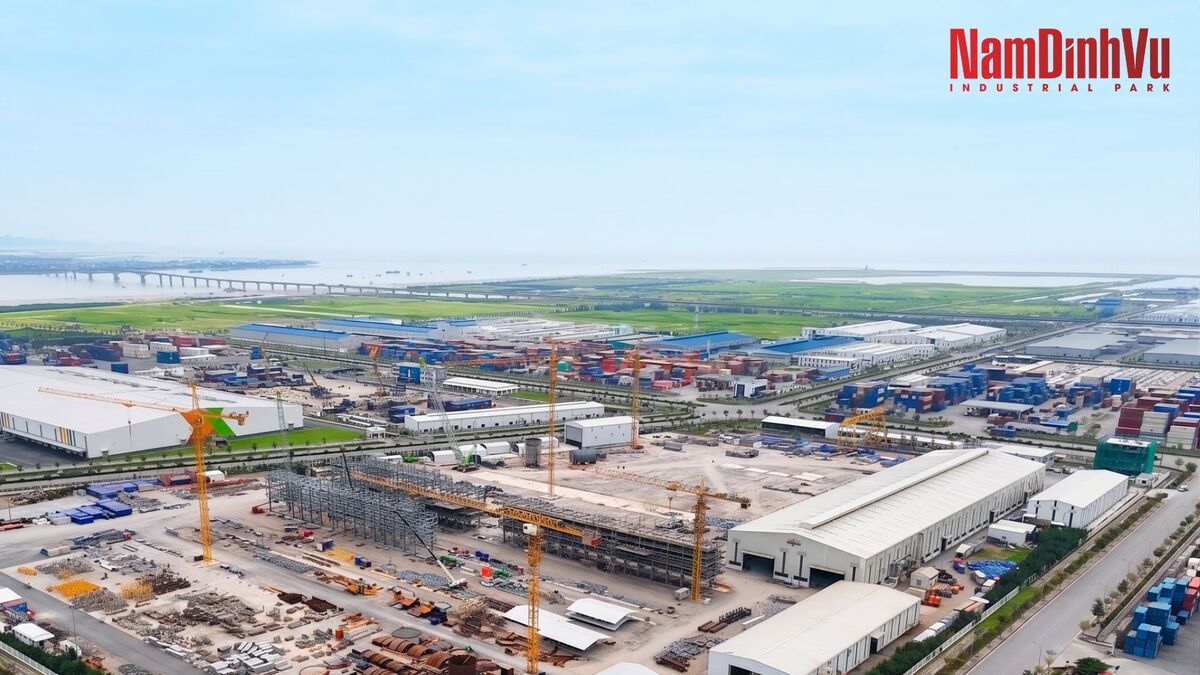
Secondary Markets Expand as Competition Becomes More Selective
Industrial land supply is forecast to continue increasing during the 2026–2029 period, particularly in Southern Vietnam and emerging industrial markets such as Tay Ninh, Gia Lai, Central Vietnam, and the Central Highlands. In Northern Vietnam, provinces including Ninh Binh and Phu Tho are also gaining investor attention thanks to competitive land availability and lower operating costs.
However, the report emphasized that increasing supply does not guarantee that all projects will achieve strong absorption. Tenant attraction will depend heavily on infrastructure quality, interregional connectivity, local investment policies, and the ability to meet specialized industry requirements. This trend is expected to create greater divergence in profitability among industrial park developers in the coming years.
Looking ahead, FDI inflows are expected to remain a major growth driver for Vietnam industrial real estate, although investment demand is increasingly shifting from processing and assembly activities toward high-tech manufacturing, research, and development. According to the report, semiconductors, electronics, eco-industrial parks, and data centers will become three of the key pillars shaping the next development cycle of Vietnam’s industrial market.
In 2025, Vietnam’s industrial market maintained stable occupancy levels and solid FDI demand. However, tenant behavior in 2026 has become more cautious, with many businesses preferring ready-built factories to test the market before committing to larger investment projects. At the same time, industrial park development costs are continuing to rise due to land clearance pressure and updated land price frameworks, creating additional pressure on future profit margins.
As Vietnam industrial real estate continues evolving, the market is increasingly favoring industrial parks with synchronized infrastructure, green development standards, strategic locations, and integrated industrial ecosystems. These projects are expected to become the primary beneficiaries of the next wave of high-quality FDI entering Vietnam during the 2026–2030 period.
Source: The Investor