


Vietnam Industrial Zoneg
Vietnam’s industrial real estate market is entering a new phase as global supply chains continue to evolve and investor expectations become more demanding. For every Vietnam industrial zone, long-term competitiveness will increasingly depend on infrastructure quality, operational capability, and sustainable development rather than land availability alone.
The Market Is Becoming More Selective
Entering 2026, Vietnam’s industrial real estate market is increasingly influenced by geopolitical uncertainties and the ongoing restructuring of global supply chains. Investment decisions are now placing greater emphasis on supply chain resilience, policy stability, and Environmental, Social, and Governance (ESG) standards. As a result, the market is forecast to enter a more selective stage where projects are differentiated by their development model and operational capability rather than simple expansion scale. This transition reflects the changing priorities of both developers and international manufacturers. It also signals that future competition will be based more on quality than quantity.
According to CBRE Vietnam, industrial land leasing activity remained relatively subdued throughout 2025. In southern Vietnam, net absorption declined by 39% year-on-year, although leasing demand recovered during the second half of the year following the launch of new industrial land supply. Meanwhile, the market continues to have significant room for expansion, with more than 1,000 hectares of additional industrial land expected to enter the southern region this year. These figures indicate that supply continues to grow despite more cautious investment behaviour. Market participants are therefore paying closer attention to long-term fundamentals rather than short-term fluctuations.
This adjustment reflects a broader transformation in the industrial real estate sector. In previous years, developers often competed through rapid expansion and large land banks. Today, greater attention is being given to infrastructure standardisation, integrated services, and operational systems that meet international requirements over the long term. As investor expectations continue to evolve, industrial parks capable of delivering comprehensive operational value are expected to stand out more clearly. This new direction is gradually reshaping the competitive landscape across Vietnam’s industrial property market.
ESG Is Becoming a Fundamental Operating Standard
Alongside changing investment priorities, ESG is steadily becoming an essential operating benchmark for industrial parks. Rather than serving simply as a competitive advantage, ESG is increasingly viewed as a prerequisite for maintaining participation in global manufacturing supply chains. This reflects a broader shift in how industrial real estate is evaluated by international investors. Sustainable development is now becoming closely linked with long-term business resilience and investment attractiveness.
Investors are paying greater attention to green infrastructure, reliable energy systems, water resource management, wastewater treatment, and the ability to implement industrial symbiosis models. These factors indicate that industrial real estate is evolving beyond providing manufacturing space alone. Instead, industrial parks are increasingly expected to support sustainable, transparent, and resilient operations throughout the entire investment lifecycle. As sustainability standards continue to rise, these operational capabilities are becoming more important in investment evaluations. They also contribute to improving long-term efficiency for both developers and tenants.
However, this transition also presents several challenges. Amid geopolitical uncertainty and supply chain restructuring, foreign investors have become more cautious about long-term commitments while demanding higher standards for policy stability, supply chain security, and operational adaptability. At the same time, the development of next-generation industrial park models, particularly eco-industrial parks, continues to face policy-related challenges as several regulations and implementation guidelines are still being finalized. These factors are contributing to a more selective investment environment across the market. Projects that can respond effectively to these evolving requirements are expected to strengthen their competitive position over time.
Industrial Parks Are Preparing for Long-Term Development
As foreign investment patterns continue to evolve alongside stricter ESG expectations, Vietnam’s industrial real estate market is expected to show even clearer differentiation based on execution capability and development quality throughout 2026. Instead of prioritising rapid expansion, many developers are now focusing on standardising industrial park models, strengthening infrastructure investment, and establishing long-term operational foundations. This approach reflects the increasingly sophisticated requirements of international manufacturers. It also demonstrates the market’s transition towards higher-quality industrial development.
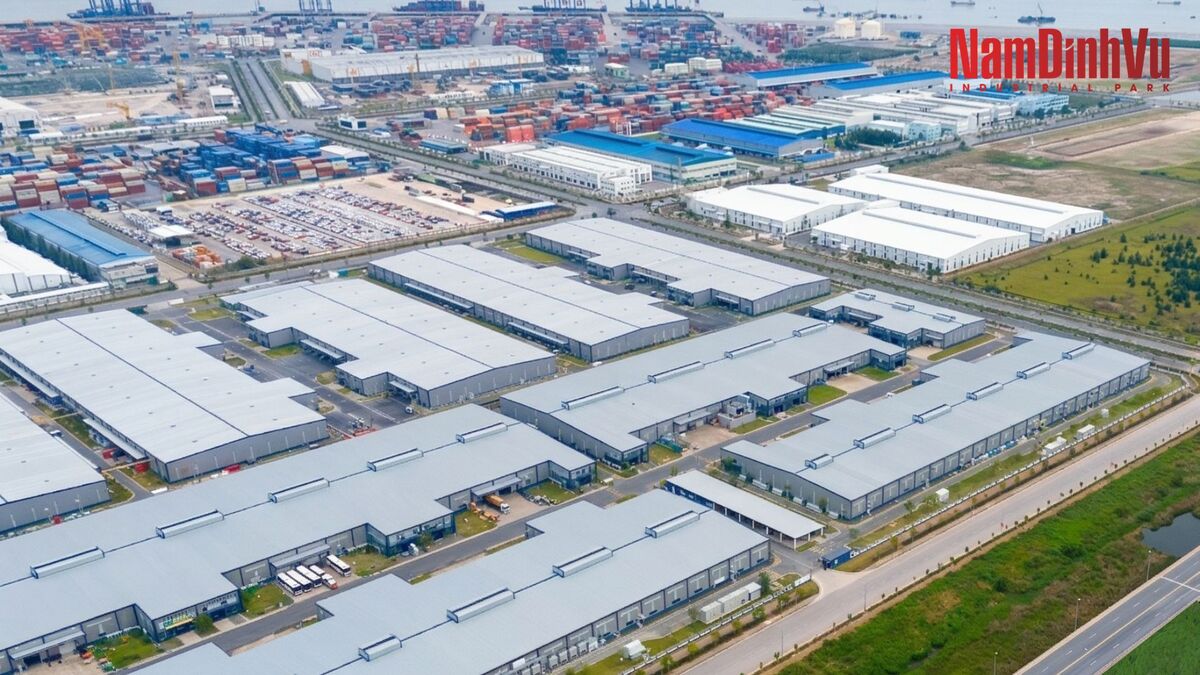
A relevant example of this transition can be seen at Nam Dinh Vu Industrial Park, which is gradually moving toward an eco-industrial park (Eco-IP) model by 2030. With a multi-functional master plan integrating an internal seaport alongside oil and gas, logistics, and industrial zones, the park enables closer connectivity between production and supply chain activities. This integrated ecosystem helps optimize resource utilization while creating favorable conditions for industrial symbiosis among enterprises operating within the park. In parallel, ongoing initiatives such as renewable energy adoption, port electrification, and infrastructure modernization demonstrate the park’s long-term commitment to ESG-oriented development, reflecting the broader direction of Vietnam’s industrial real estate market.
Overall, Vietnam’s industrial real estate market is entering a stage where operational quality, infrastructure readiness, and sustainability standards carry greater weight than expansion speed alone. Industrial parks capable of combining reliable infrastructure, effective operations, and sustainable development strategies are expected to attract more stable investment flows in the years ahead. This trend highlights the market’s gradual transition towards long-term value creation. As the industry continues to mature, quality and resilience are likely to become the defining characteristics of successful industrial developments.
In conclusion, Vietnam’s industrial real estate sector is entering a more selective and sustainability-oriented development cycle. For every Vietnam industrial zone, future competitiveness will increasingly depend on infrastructure quality, ESG integration, and long-term operational capability, allowing projects to better meet the evolving expectations of global investors and manufacturers.
Source: